Through the prize, Agog supports creators using extended reality (XR) to foster connection and help people imagine a more sustainable world
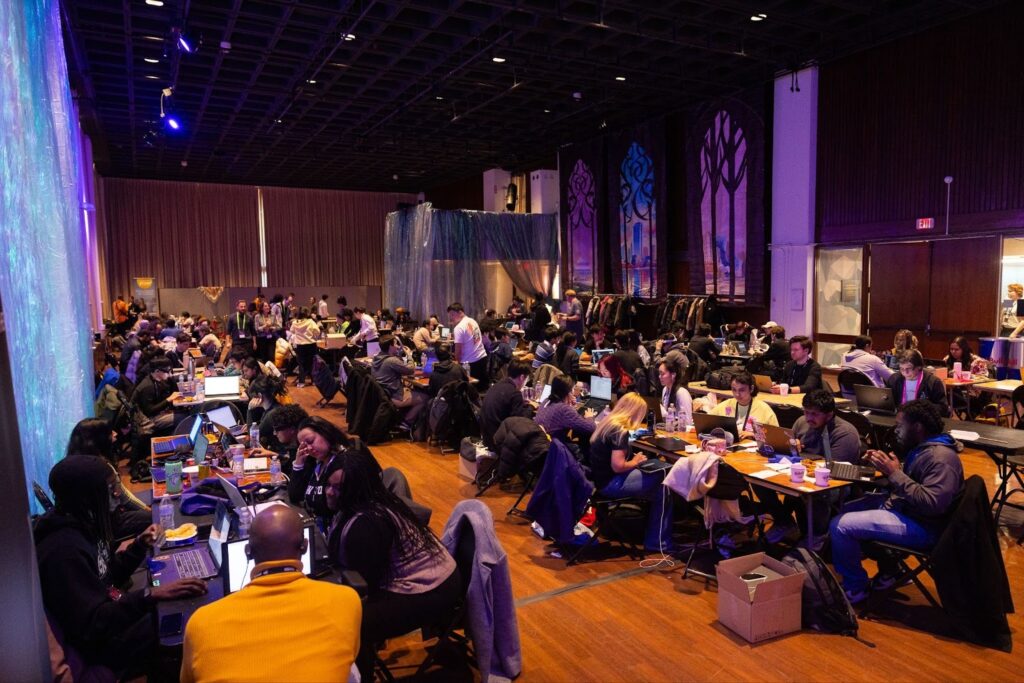
February 3, 2026, CAMBRIDGE, Mass. — Agog: The Immersive Media Institute announced today that two projects—Mannahatta 2100 and TierSpace—won Agog’s EcoDreaming: XR for Collective Futures Grand Prize at the 2026 Reality Hack at MIT, one of the world’s leading experiential technology hackathons. The award provides financial support to creators and recognizes extended reality (XR) projects that spur connection, foster empathy, and bring climate solutions and hopeful visions of the future into focus.
Mannahatta 2100 is a location-based augmented reality (AR) project that invites participants to step into two divergent futures of New York City in the year 2100, each shaped by the decisions made today. Developed by a team of artists, futurists, graduate students, and technologists, the experience layers speculative climate outcomes onto the same physical locations and grounds them in Indigenous land stewardship practices and diverse cultural histories, making climate change feel immediate, personal, and actionable.
TierSpace is a participatory XR project designed as a game-like 3D environment that transforms opinions into visual relationships, encouraging dialogue around food sustainability, ethical sourcing, and planetary well-being. Created by an international team of graduate students, designers, engineers, and creative technologists, TierSpace creates a shared environment where people can explore differing perspectives and grapple with the complexities of real-world decisions together.
Together, the winning entries reflect the Agog prize track’s emphasis on social XR, using participatory formats to move climate conversations beyond data and abstraction into collective understanding and action. Mannahatta 2100 invites empathy and awareness by making decades of cause and effect feel immediate, while TierSpace activates connection and collaboration around potential solutions.The winners were selected by an independent jury of six experts spanning immersive media, storytelling, research, design, education, and technology.
Now in its third year supporting Reality Hack at MIT, Agog—a philanthropic organization advancing immersive media for social good—returned in 2026 with the EcoDreaming prize track, one of 26 sponsor tracks at this year’s event. In addition to support of the event and awards, Agog staff and professional mentors advised participants during the hack, and Agog supported travel for approximately 50 scholars through Reality Hack’s travel scholarship program. Agog’s involvement reflects its broader mission to help people of all backgrounds use immersive media to bridge divides, build community, and inspire action toward a more just and sustainable world.
Reality Hack at MIT is an annual five-day convening, held this year January 22–26, that brings together nearly 1,000 developers, researchers, startup founders, and industry practitioners from around the world to design, prototype, and validate next-generation experiential technologies. Participants attend to develop skills, collaborate with like-minded peers, compete for cash-backed prizes, receive mentorship from industry experts, and connect with organizations shaping the future of immersive media.
“Reality Hack at MIT is an essential place where immersive technology is treated not just as a tool, but as a way of bringing people into deeper relationships with each other and the world we share,” said Chip Giller, co-founder and executive director of Agog. “Mannahatta 2100 and TierSpace really showcased how XR can help us envision a climate-friendly, just future and work together to build it.”
“Mannahatta 2100 was built to help people feel the long-term consequences of the choices we’re making right now,” said Anatola Araba, artist and director of Reimagine Story Lab, and member of the Mannahatta 2100 team. “Agog’s focus encouraged us to ground those futures in ancestral memory and to instill agency in our ability to shape tomorrow, so climate change becomes something people can encounter—and take responsibility for—together.”
“Engineers are taught that every decision is a tradeoff,” said Ben Crystal, creative technologist and TierSpace team member. “As consumers, we feel that reality every day, from big questions about how we build and vote for our energy future to small ones like how sustainable oat milk really is. Agog’s emphasis on social XR pushed us to design an experience centered on dialogue and shared reflection, giving people a multidimensional space to think through life’s decisions.”
———-
About Agog: The Immersive Media Institute
Agog is a philanthropic organization that helps creators and nonprofit leaders harness extended reality to build human connection, cultivate empathy, and inspire action on urgent social and environmental challenges. Agog plays a catalytic role at the intersection of philanthropy, technology, and culture, helping XR grow into a more responsible, inclusive, and impact-driven field.
———-
Media Contact
Alex Capriotti
alex@agog.org
# # # # #