At a moment when immersive tools are becoming more accessible—but not always more intentional—Agog partnered with Arizona State University to explore what values-led XR practice can look like in the hands of creators working on justice, memory, and belonging.
Thirteen artists, organizers, scholars, and creative technologists from across the United States arrived at ASU’s downtown Los Angeles campus in October for a five-day exploration of immersive storytelling. The XR Impact Creators Lab, presented by Agog and ASU’s Narrative and Emerging Media Program (NEM), invited participants to experiment with emerging XR tools while asking a bigger question: how might immersive media help audiences not just understand a story, but truly feel it?
Led by Professor Nonny de la Peña, a pioneer in the XR field and founding director of ASU’s NEM program, and Agog’s Head of Production Mary Matheson, the lab brought together participants from fields as varied as grassroots activism, journalism, the arts, immigrant rights, Black queer storytelling, and climate justice. Many had never worked with XR before but saw its potential to reimagine how social-impact stories are experienced. The lab’s curriculum aimed to meet that moment, offering a blend of technical training, ethical discussion, and hands-on creative exploration.
“Agog was thrilled to collaborate with ASU to create this lab, a first step in our program to train and support creatives looking to harness XR for their impact work,” said Matheson. “It was so inspiring to watch participants who came from all different areas experiment with how immersive media can help audiences not just see a story, but feel it—and maybe even be moved to act.”
Five days of learning by doing: Technical immersion and creative inquiry
The lab unfolded as a progression through immersive media’s most influential tools. Early sessions introduced participants to the history and future of XR, grounding the technical work in larger questions of access, representation, and cultural context. A special Indigenous Peoples Day session hosted by The Chapter House helped set a tone of reflection and community-centered storytelling from the outset.
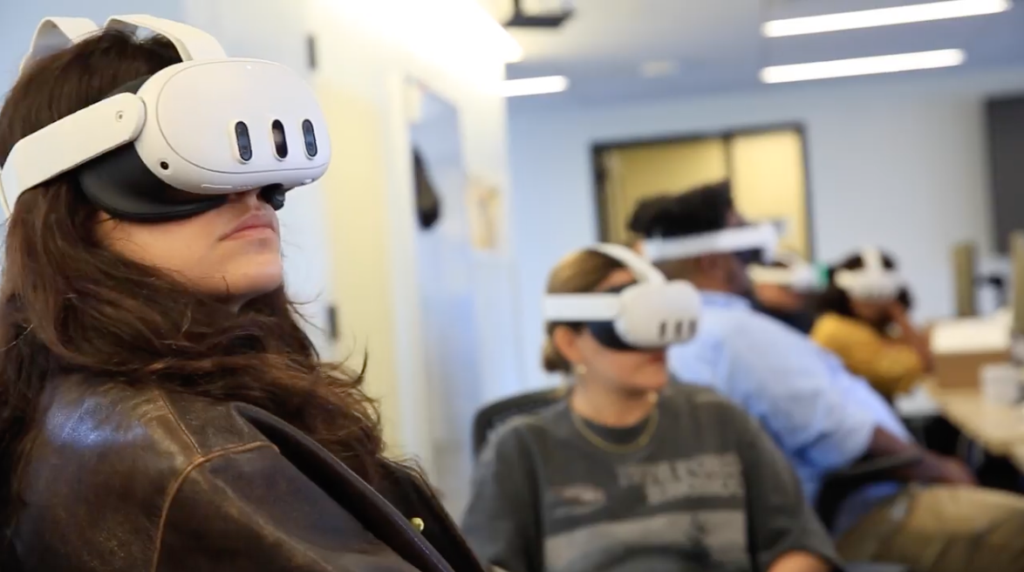
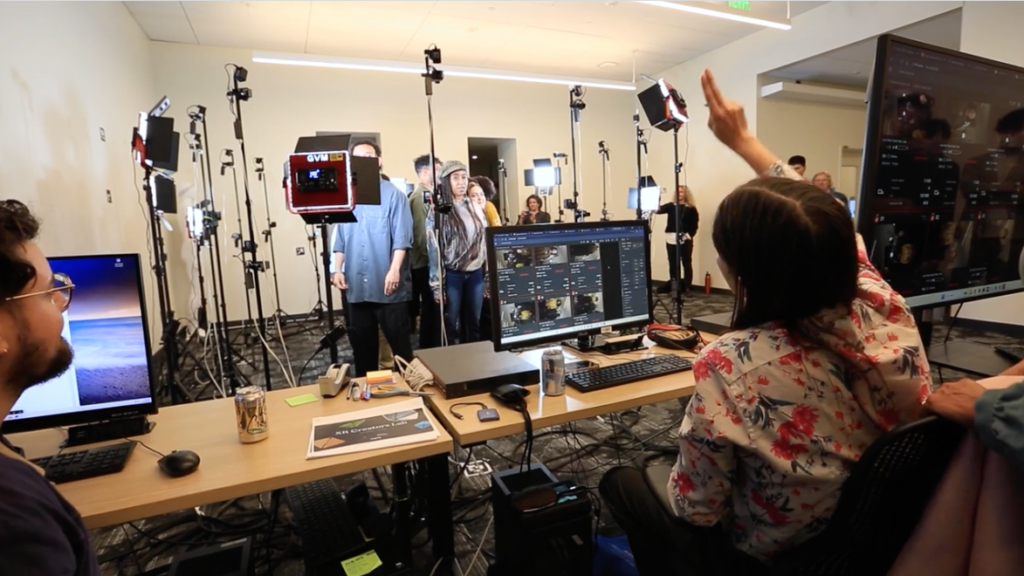
Workshops throughout the week covered 360 filmmaking, 4D Gaussian Splats, spatial audio, XR journalism, motion capture, and game-engine worldbuilding. Afternoons were often dedicated to hands-on experimenting with newly learned techniques—scanning personal objects, testing volumetric capture, or assembling early AR concepts.
For many participants, these sessions revealed how immersive media could expand or reshape their current practices. Some were drawn to XR’s potential for preserving cultural memory; others to its ability to build environments that audiences could move through rather than observe at a distance.
“We’re always looking for new ways to expand the stories of the museum and the interaction with communities beyond our museum walls,” said participant Chauncey Smith, educational technologist at the National Center for Civil and Human Rights. “XR is a great way to do that.”
Creating together: Collaboration as a foundation
A hallmark of the lab was its cross-disciplinary environment. Top XR industry leaders, journalists, and artists offered guidance as participants refined their ideas. The result was a week defined as much by conversation as by creation.
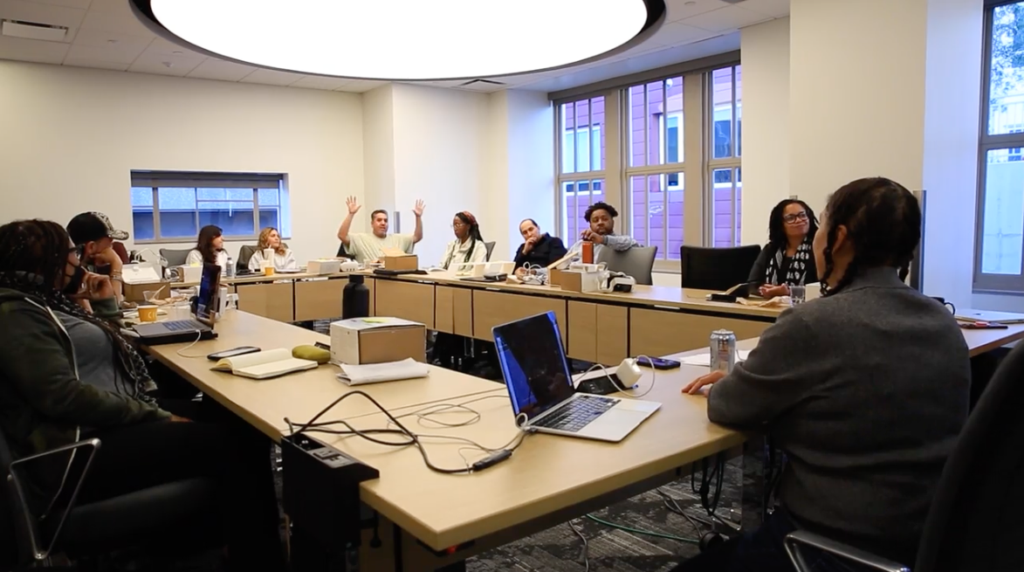
By bringing together practitioners who rarely have structured opportunities to co-create, Agog and ASU hoped to spark new connections and approaches. Between sessions, participants lingered over equipment demos, swapped troubleshooting tips, and traded insights about how XR might intersect with their respective fields. The mix of experience levels—from XR newcomers to seasoned technologists—proved to be a strength rather than a divide.
What emerged: Prototyping the future
The final day challenged participants to synthesize their learning into a short pitch for an XR project. The ideas that emerged ranged from immersive journalism concepts to speculative climate narratives and interactive memory archives. While the pitches were early-stage, they shared a consistent throughline: a desire to use XR to reframe stories of identity and belonging, build real connections and community, and support social change.
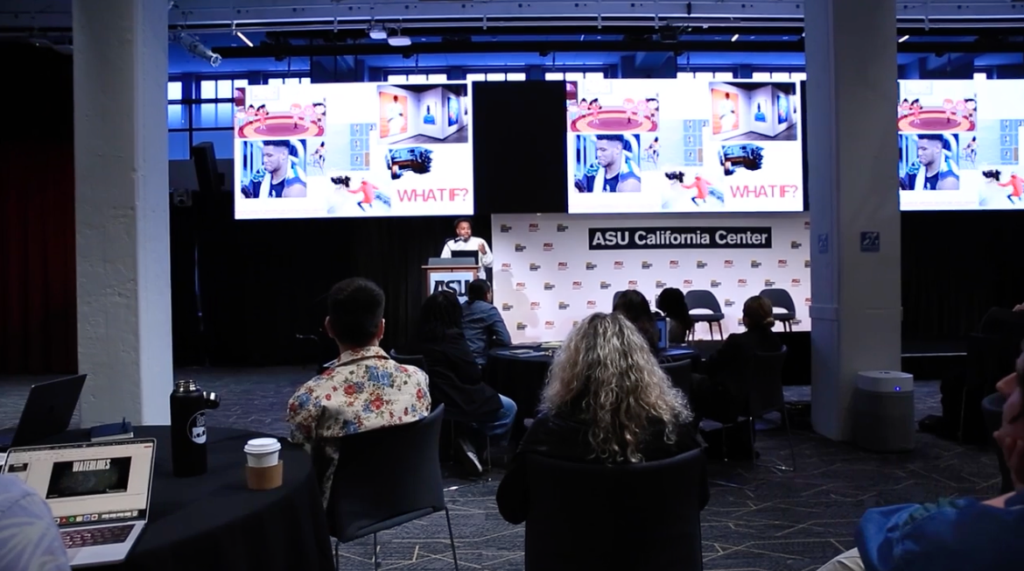
“A lot of our conversations have been—how do we use these tools to become more human and enhance humanity?” commented participant Richard Ng, program manager at IndigiDAO.
Instructors described the presentations as incredibly thoughtful, blending technical curiosity with ethical intention. For many participants, the pitch session marked the point where the lab’s diverse threads—creativity, technical learning, and social impact—began to converge.
A model for what’s possible
The XR Impact Creators Lab closed with a small gathering overlooking downtown LA, but the conversations that animated the week showed little sign of ending. Participants left with new collaborators, new skillsets, and a clearer sense of how immersive media could shape their future work.
For Agog and ASU, the week demonstrated how quickly creators can gain confidence with emerging tools when supported by a values-driven framework. It also suggested a broader lesson: that XR’s most meaningful evolution may come not from technological breakthroughs alone, but from communities equipped to experiment with intention and care.
As Matheson noted, “Watching these creators transform two-dimensional concepts into multi-sensory, immersive worlds in only five days shows the power of mixing creativity, technology, and social change.”
Instructors and speakers
A selection of the practitioners who led sessions during the lab included:
- Nonny de la Peña, Program Director, Arizona State University, Narrative and Emerging Media
- Mary Matheson, Head of Production, Agog
- Sam Wolson, Visual Features Editor, The New Yorker
- Shari Frilot, Chief Curator, Sundance New Frontier
- Peggy Weil, Artist
- Fred Volhuer, former CEO, Atlas V
- Mike Caronna, Research Fellow, Starling Lab
- Tim Gedemer, Co-owner, Source Sound, Inc.
- Alton Glass, CEO, GRX Immersive Labs
- Cameron Kostopoulos, Founder and CEO, KOST
- Akilah Martinez, Founder and Creative Technologist, Glittering World Girl
- Rory Mitchell, Director, Mercantile Studios
- Jet Olano, Learning Technology Specialist, Arizona State University, Narrative and Emerging Media
- Enoch Oyetunji, XR Media Specialist, GRX
- Jonathan Williams, Founder, VRX