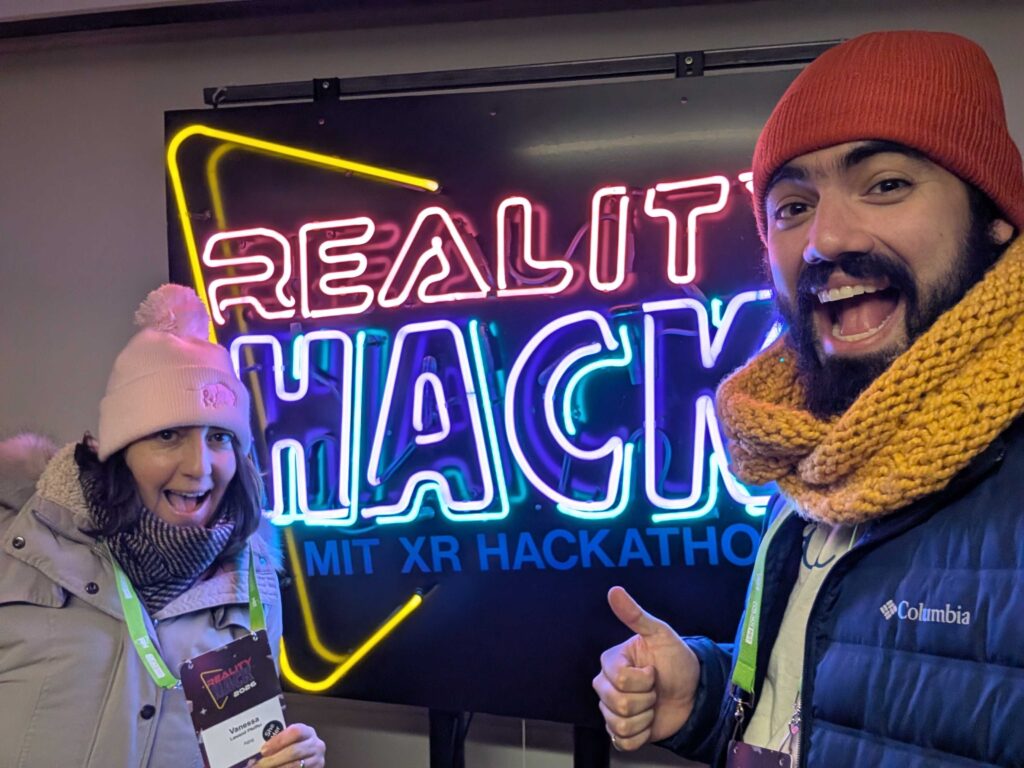
Reality Hack at MIT is an annual immersive tech hackathon where students, artists, and technologists come together to prototype what’s next for XR. This year, Agog showed up as a sponsor and mentor, represented by Raul Carvajal, senior technical project manager, and Vanessa Lawand Pfeiffer, community strategy & engagement manager. Together, they supported teams in Agog’s prize track, which focused on climate, community, and collective futures.
Catch their debrief below!
Raul Carvajal
Well—that was an adventure!
I’ve been to a lot of other hacks over the years, but that was my first Reality Hack at MIT.
Vanessa Lawand Pfeiffer
It was my first hack ever! Which honestly made it even more intense—in a good way.
Raul
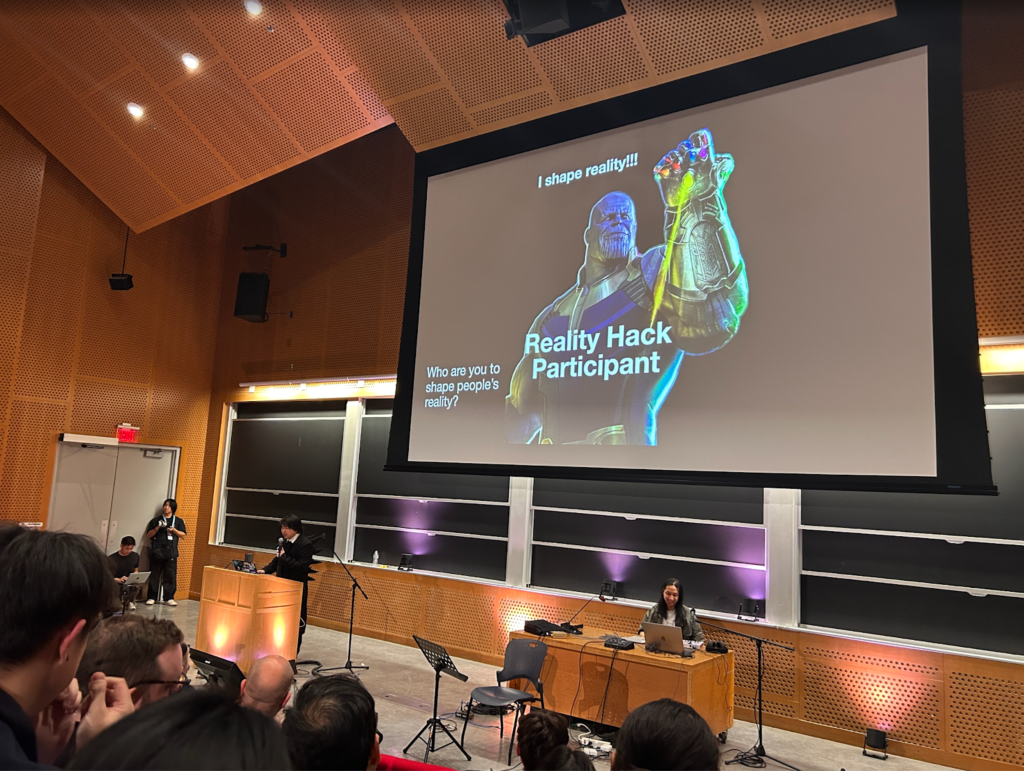
Reality Hack has always loomed large for me. I’d wanted to go for years but never had the opportunity. So when we got to represent Agog this year, I was genuinely excited. I love hackathon energy—it’s always super electric.
What did you think walking into your first one?
Vanessa
Honestly? I was anxious at first. I don’t come from a deep technical background, and those environments can feel intimidating. But I was reminded how welcoming and open-minded this community is, which is exactly what makes this event so special!
I was also impressed by how diverse the crowd was. I think that has a lot to do with the travel scholarship program, which has been so intentional about making this a space for everyone. The scholarship initiative has been around for a couple of years now, and this year Agog supported travel for about 50 scholars. It felt meaningful to play a role in that.
Your impressions?
Raul
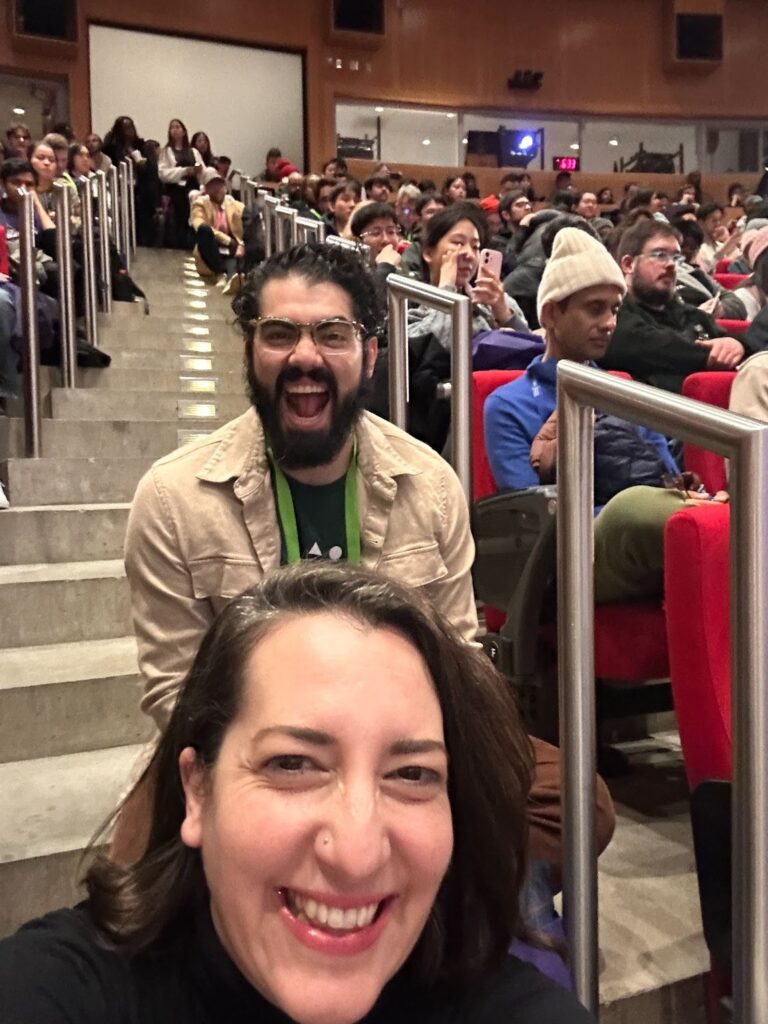
Just from being in the room, it was clear it was a really mixed, sizable crowd with different perspectives—and experience levels. I mean, it was standing room only during the opening ceremony.
Vanessa
You and I had to sit on the steps! The competition spread across—what—three floors of the Student Center?
Raul
We made it our mission to talk to as many teams as possible—around 80 teams—to introduce Agog’s prize track, EcoDreaming: XR for Collective Futures. I’m really glad we did that early. It gave teams a chance to ask questions, make a quick connection, and then follow up later for mentorship.
Vanessa
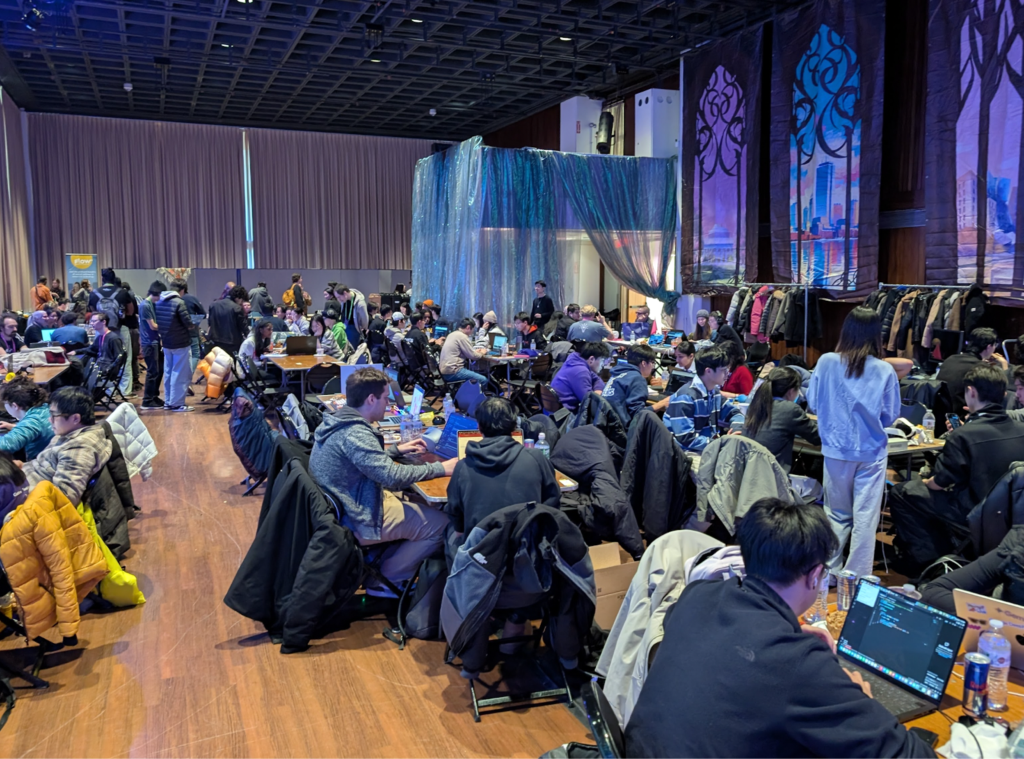
Everyone moved fast. Once the hacking started, people went heads-down immediately. It was fun to see how different teams approached the process.
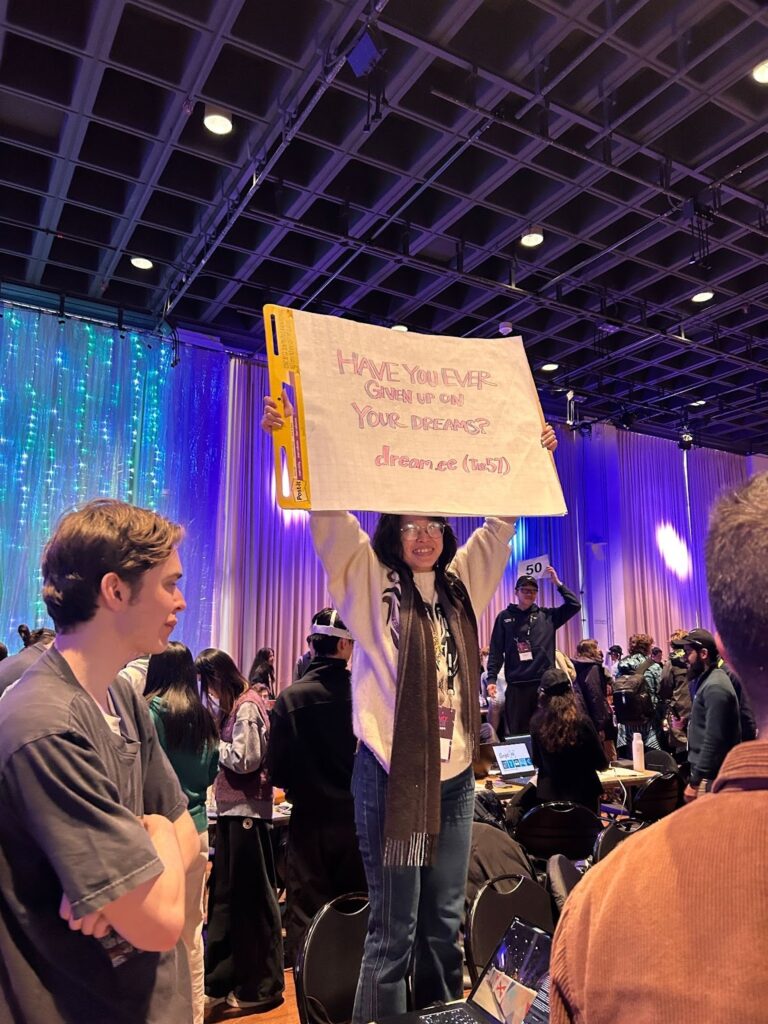
One of my favorite moments was a student standing on a chair, holding a sign that said, “Have you given up on your dreams?”
Raul
Ha! Thankfully that was an invitation to try her build and not her state of mind.
Vanessa
Yes! Best DIY marketing campaign ever!
Before we get to the prize winners, we have to talk about the weather. I mean, thank goodness I’m Canadian 😅.
Raul
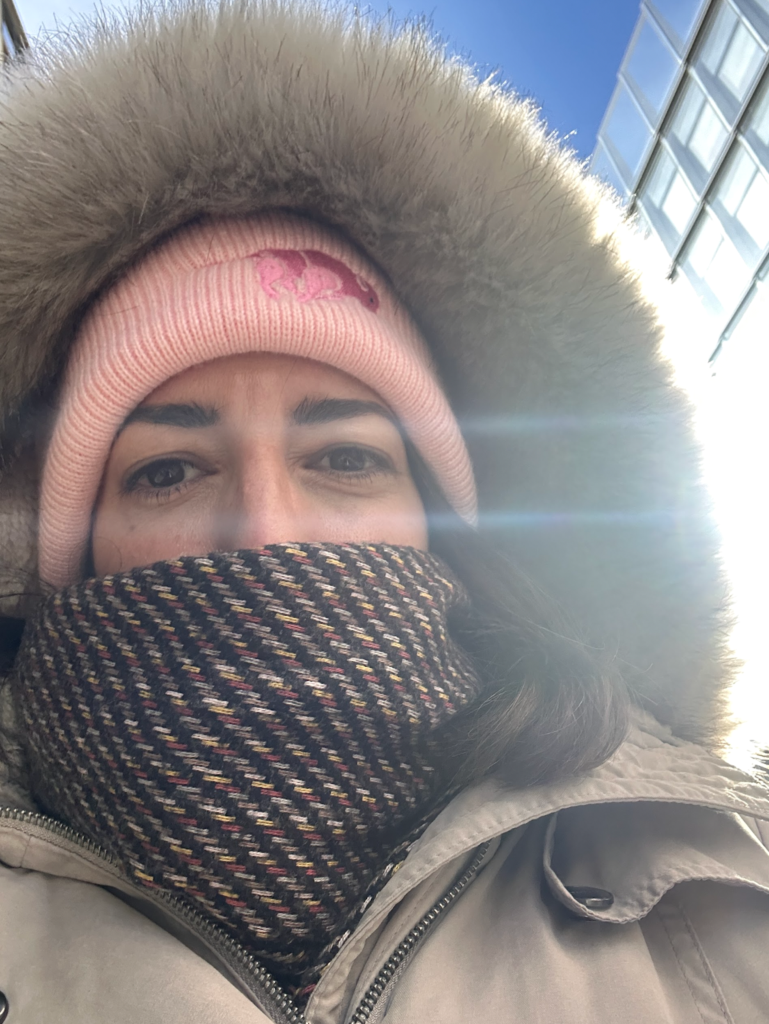
That snowstorm! Apart from turning our 15-minute walk to the Student Center into an endurance test—through a literal wind tunnel—it really threw the event curveballs.
Boston was expecting two feet of snow overnight. Deadlines got pushed up, judging was compressed, and the closing ceremony had to move to Zoom.
Vanessa
Chaotic, yes—but also kind of perfect? Despite everything, people stayed engaged. The energy didn’t drop.
And in the end, there were so many strong projects. But I think the judges landed on two truly special ones.
Ready to get into them? I’ll do one. You do one?
Raul
Sure!
Vanessa
First, it’s worth saying what the Agog prize track is about. Agog created this award to recognize XR projects that foster connection, build empathy, and bring climate solutions—and hopeful visions of the future—into focus.
What excited me most was that the judges selected two grand prize winners that approached that challenge in very different ways.
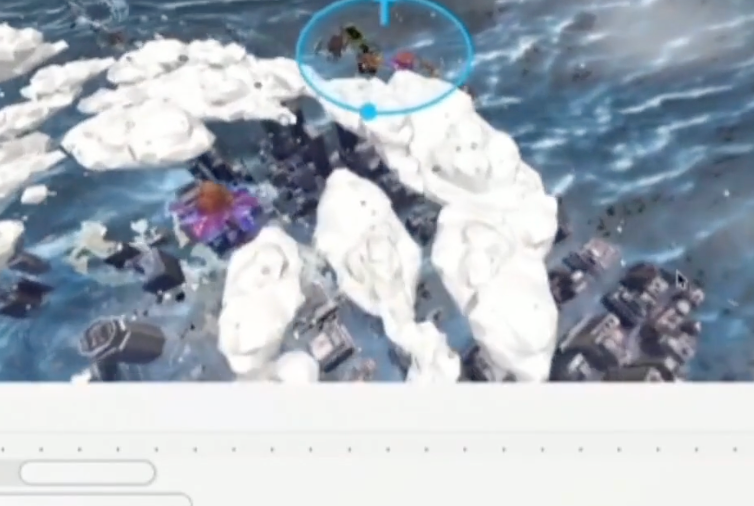
Mannahatta 2100, for example, acts as an AR portal allowing participants to experience different futures for New York City based on choices made today. The team grounded their work in culturally specific references, including Indigenous land stewardship practices. It shows what optimistic, responsible futures can look like—and that’s something Agog really wants to see more of in the field.
Raul
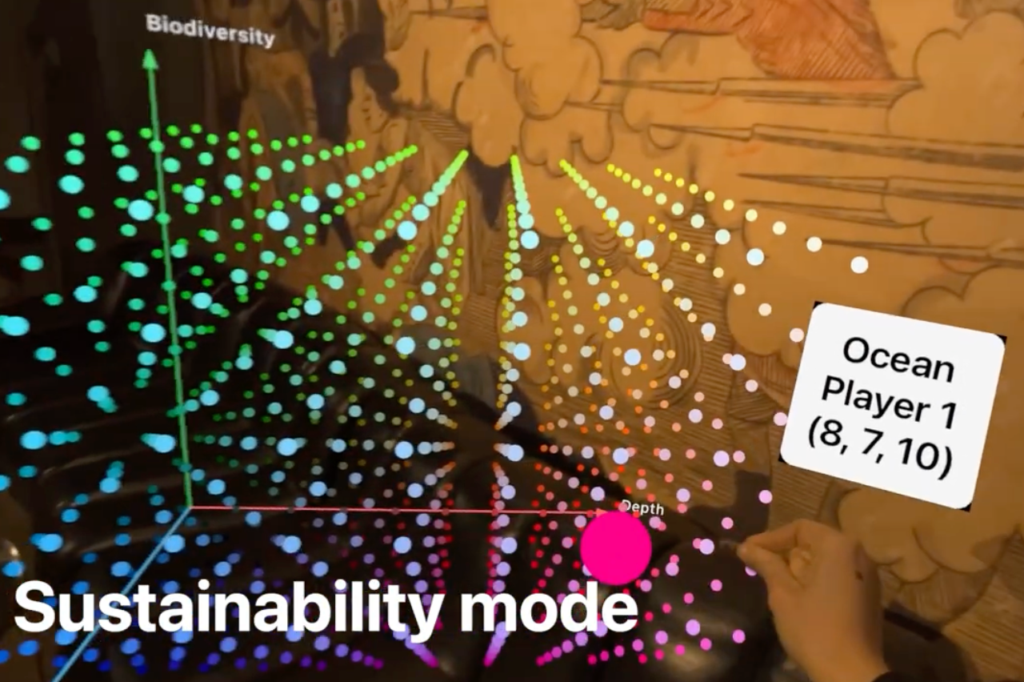
Our other winner, TierSpace, took a completely different approach. It’s designed as a collaborative, game-like environment where players map topics across a 3D grid and use that spatial setup to talk through opinions, stories, and trade-offs.
It encourages nuance, reflection, and shared decision-making—which feels especially powerful for conversations about climate solutions.
Vanessa
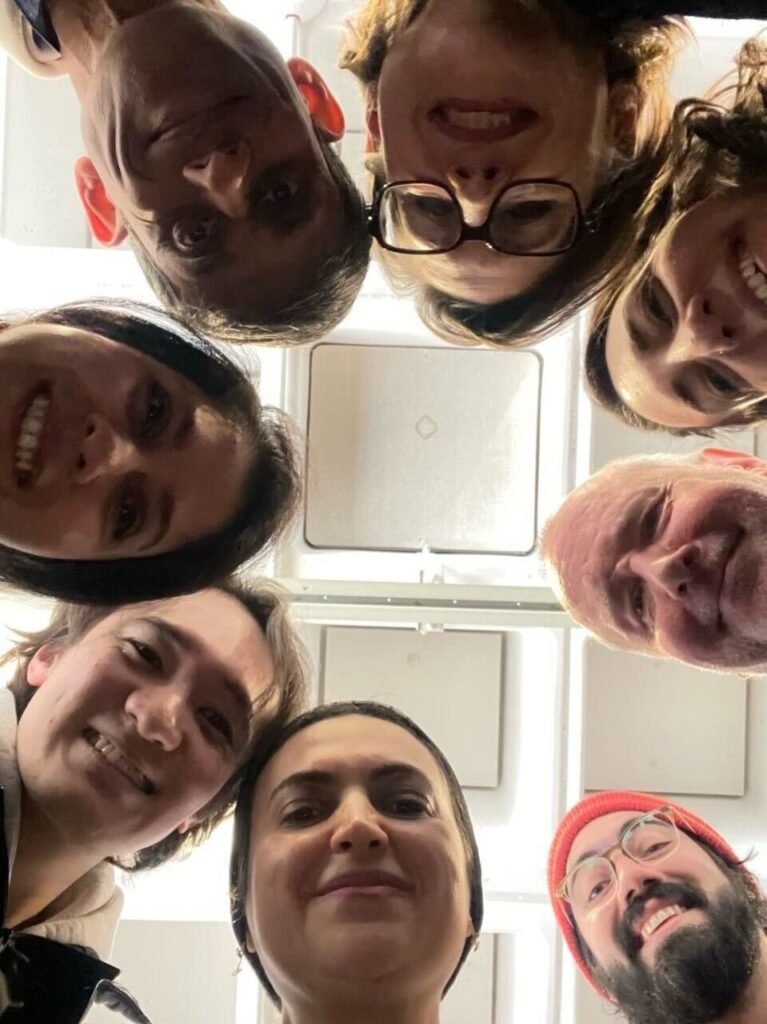
I also want to acknowledge the judges, who came from so many different disciplines—immersive media, storytelling, research, design, education, technology… All six were deeply engaged, each bringing a distinct perspective that strengthened the deliberation.
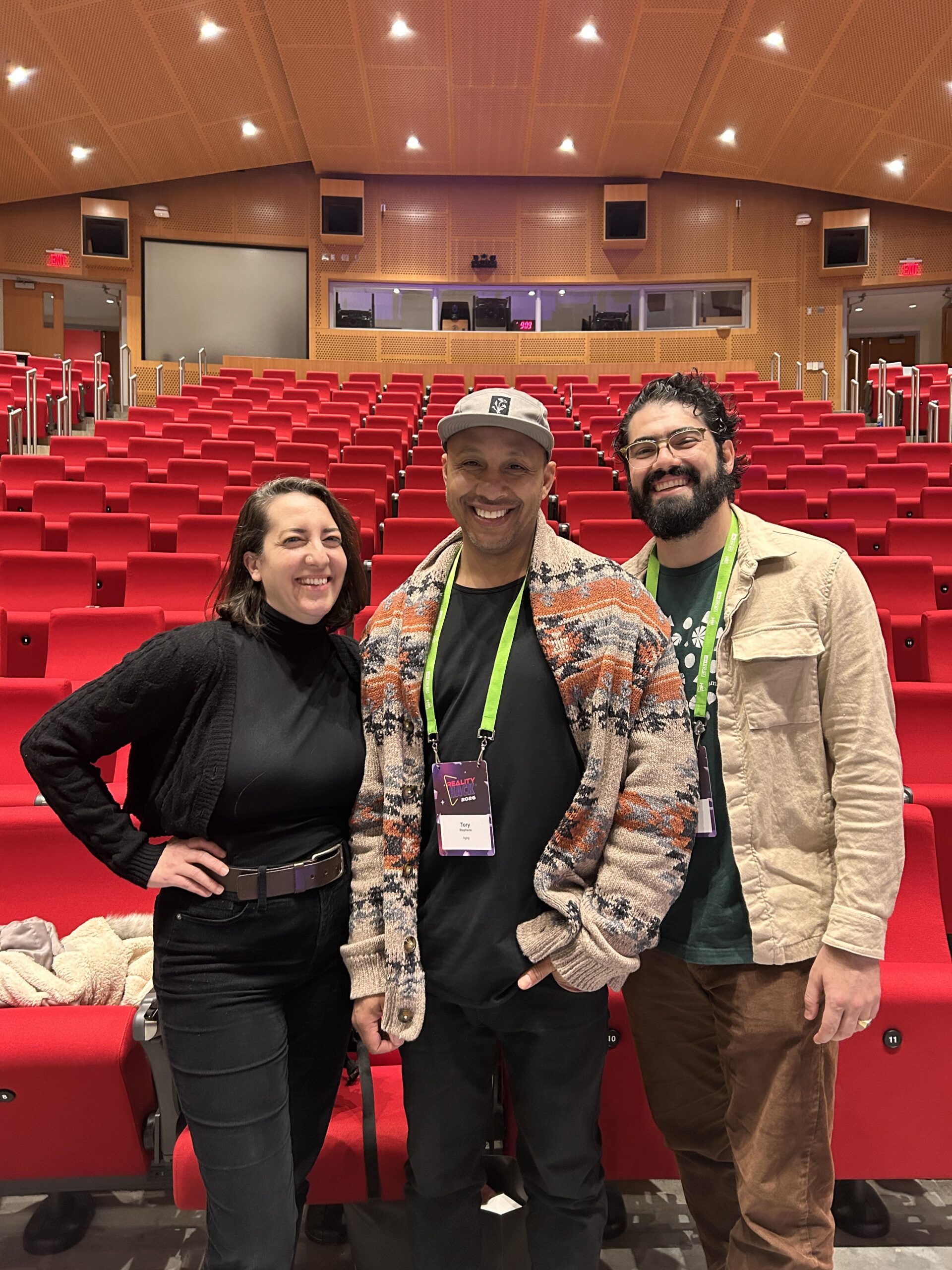
And a quick shout-out to guest mentor Tory Stephens from Grist, who worked with teams to think through how immersive storytelling can support climate solutions and public understanding. Having that lens in the room made a real difference.
Raul
100 percent. That mix of creative, journalistic, and research perspectives is what pushes projects beyond the build and toward real impact.
We were focused on the content and the experience—especially social XR, things people could do together, whether synchronously or asynchronously.
I think teams felt that freedom.
Vanessa
And yet, hardware trends were definitely visible—glasses, sensors, Arduino setups. But what struck me was how many people recognized that this work goes beyond any single platform or company.
That awareness felt important. Especially right now.
Raul
Totally. People were excited to build stories, workflows, and experiences that spoke to their own visions of the future. That throughline showed up again and again.
Any final thoughts from your first Reality Hack?
Vanessa
If I had to name two themes, I’d say community and resilience. You really feel the power of community when external things, like a literal blizzard, start testing it.
That sense of connection and adaptability feels especially necessary right now.
Raul
I agree. And I’ll add this: we talked to a lot of first-time hackers who weren’t sure what to expect. My takeaway is that Reality Hack really rewards showing up with whatever skills you have.
It’s less about producing a perfect thing and more about the people you meet in the process. That community becomes a virtuous cycle—and it keeps growing.
So if you’re on the fence: jump in.
Vanessa
And apply for the visiting scholars program! Reality Hack offers support for flights and accommodations, and those resources can make all the difference.
Raul, anything you’d do differently next year?
Raul
Warmer parka.
Vanessa
Long johns.
Raul Carvajal is Agog’s senior technical project manager. Vanessa Lawand Pfeiffer is Agog’s community strategy & engagement manager.