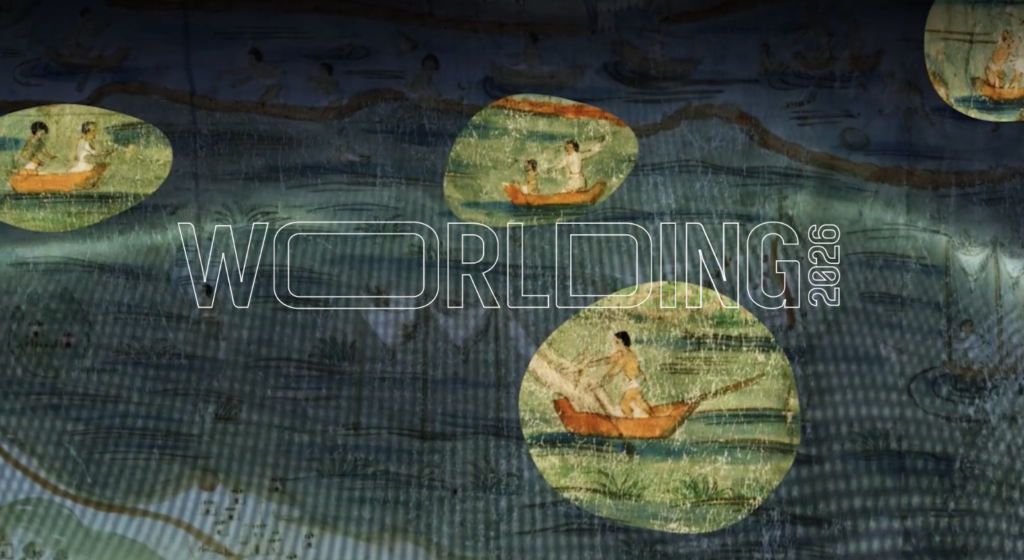
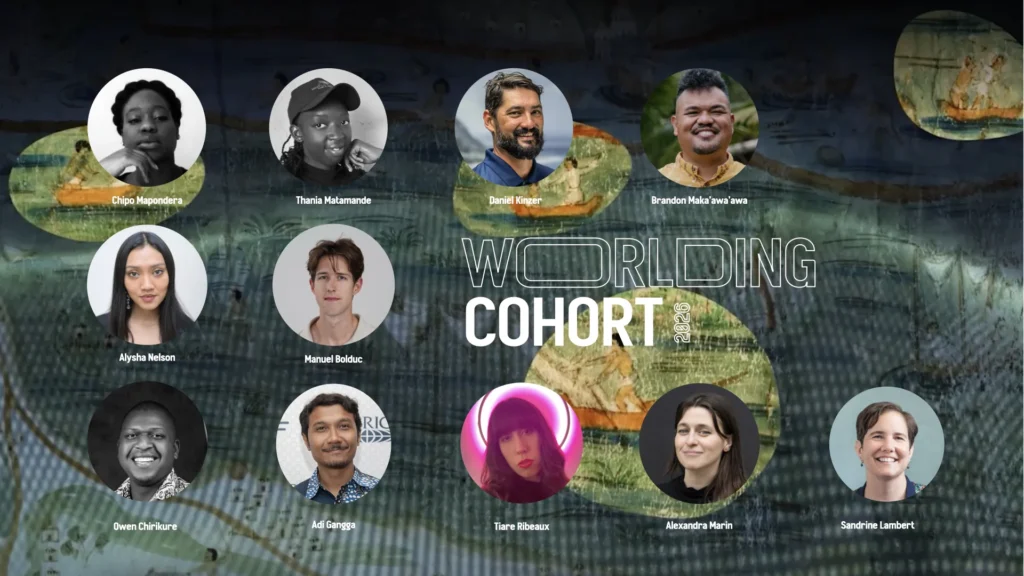
It was seven in the morning for some of us and well past midnight for others. That’s the first thing you notice when you join a WORLDING session: The shades of light in the Zoom grid tell a story before anyone says a word. This spring, we had the privilege of sitting in on the final presentations of the 2026 WORLDING cohort; four teams connecting from Zimbabwe to Hawai’i to Montréal to Indonesia gathered virtually to share what they’d built over three weeks of intensive work with the MIT Co-Creation Studio’s incubator program.
WORLDING is a global incubator led by the MIT Co-Creation Studio that brings together community leaders, artists, technologists, researchers, and storytellers to co-create immersive experiences exploring climate futures rooted in specific places and cultures. Through workshops, mentorship, and collaborative design, teams use XR to imagine how communities might adapt, thrive, and shape their futures in the face of environmental change. Agog helps fund the program because it embodies something we believe in: that XR is most powerful when it’s built with communities. What we saw deepened our conviction and left us agog at the potential impact.
A Room of Real Questions
WORLDING frames each team’s work around research questions, not deliverables—and it shows. The presentations were inquiries instead of pitches, grounded in place and practice and shared by makers who are also stewards of the communities they work with.
“What stood out was that these projects were treating climate resilience as a relationship challenge as much as a technical one, considering people, land, water, memory, governance, and future generations,” says Jasmin Askew, Agog’s Program Manager. Across four projects and four ecosystems, there was a shared throughline: The communities most affected by environmental change should be designing the futures they’re asked to live in.
What the Cohort Built
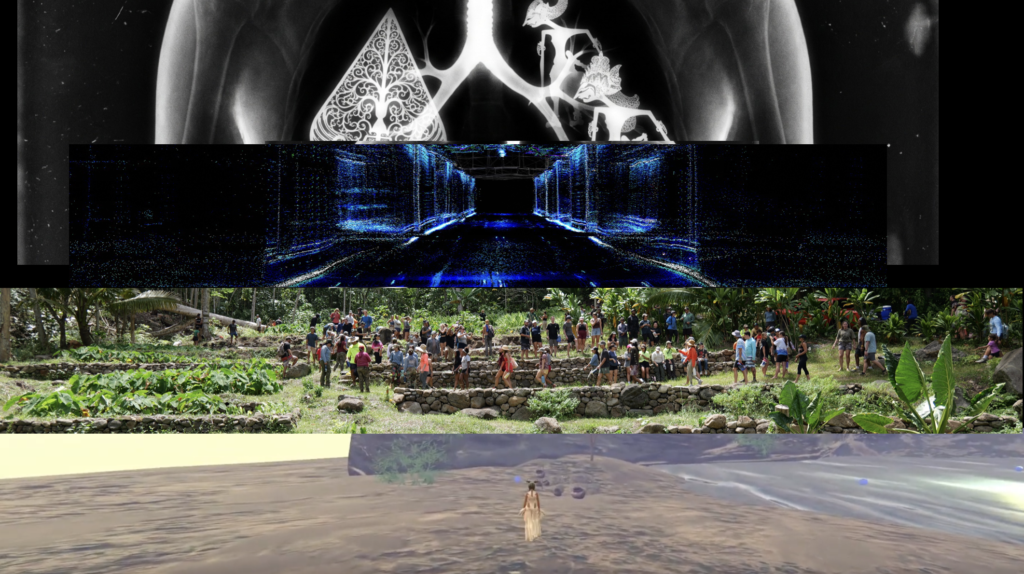
Kuchema XR, from Zimbabwe’s Chimanimani region, invites participants to journey through sacred water sites, oral histories, and community memory—an immersive experience that asks what becomes possible when indigenous ecological knowledge is treated as innovation rather than historical artifact. The work extends beyond the headset: Community screenings, WhatsApp distribution, YouTube content, and sign language ensure the dialogue travels even in low-resource rural contexts. “XR becomes a ceremonial space for remembering and for imagining,” said Chipo Mapondera, the team’s creative technologist.
Clouds Are Massing, from Montréal, is building a participatory, location-based experience to engage residents in the governance of data centers—a massive, invisible infrastructure quietly consuming the city’s power surplus. The team is doing something quietly radical: opening the black box of the cloud and asking citizens to imagine more just alternatives. “We want to open a crack into technological determinism,” said Sandrine Lambert. “Open a space to imagine something else.”
Paru, from West Kalimantan, Indonesia, uses interactive shadow puppet imagery to pull audiences into the impossible choices facing smallholder farmers each dry season: Burn your land or watch your livelihood collapse. Every decision in the experience leads to the same place—a shared space of collective reimagination—because, as co-creator Alysha Nelson made clear, there is no right answer within a broken system. “The divide between human and nature is man made,” she said. “Land sickness, air sickness, human sickness is all part of the same event.”
And the Ahupua’a Living Lab, rooted in sovereign land in Waimanalo on Oahu, Hawai’i, is building a spatial storytelling platform and digital twin that mirrors the physical restoration site it represents: As food terraces are rebuilt and native plants grow, the digital world grows alongside them. It’s among the most elegant expressions of co-creation we’ve encountered. “We move at the speed of trust and aloha,” said Brandon Maka’awa’awa, Vice President of the Nation of Hawai’i. You can explore the prototype until July 27.
These teams were joined by the MIT Exploration Team, made up of a graduate student and two recent alums, who participated in the workshop alongside the cohort.
What Cross-pollination Looks Like
One of the most striking things about watching the WORLDING presentations was seeing the cohort respond to each other’s work in real time. “What I most appreciated was the creation of an intentional space for cross-pollination of thoughts, ideas, strategies,” said Vanessa Lawand Pfeiffer, Agog’s Community Strategy and Engagement Manager. “Each project was so different, but you could feel them informing and nourishing one another, growing in new directions and sparking new ideas. There’s a reason this program was built by the Co-Creation Studio. It’s in the name.”
The four projects on their own were impressive, but we were equally moved by the community of practice they formed together. Questions raised in one presentation surfaced shared challenges across the others around governance, participation, intergenerational knowledge, and how to expand to wider audiences when local context is everything. As Jasmin reflected, “I love seeing projects whose greatest contribution is helping a community imagine, preserve, or build something together, and then allowing the lessons from that process to travel outward.”
Why the Field Needs This
WORLDING provides a launch pad for a different kind of practitioner: one with technical capabilities and deep community relationships, navigating complex questions about stewardship, cultural protocols, and long-term care. The 2026 cohort brought together creative technologists, documentary filmmakers, community organizers, anthropologists, farmers, and Indigenous leaders. That’s what the field gains when it widens the door.
For those of us working to advance XR for social good, the question WORLDING keeps asking feels like the right one: What becomes possible when immersive technology is built from within by the people closest to the land, the water, the crisis, and the story?
What can you do with this technology to imagine a better future? If you’re a creator, researcher, or community organization working at the intersection of place, story, and climate, keep an eye on WORLDING’s open calls. The 2026 cohort showed us a field that is just getting started.
Jasmin Askew is Agog’s Program Manager. Vanessa Lawand Pfeiffer is Agog’s Community Strategy and Engagement Manager. Jen MacDonald is Agog’s Editorial and Brand Lead.