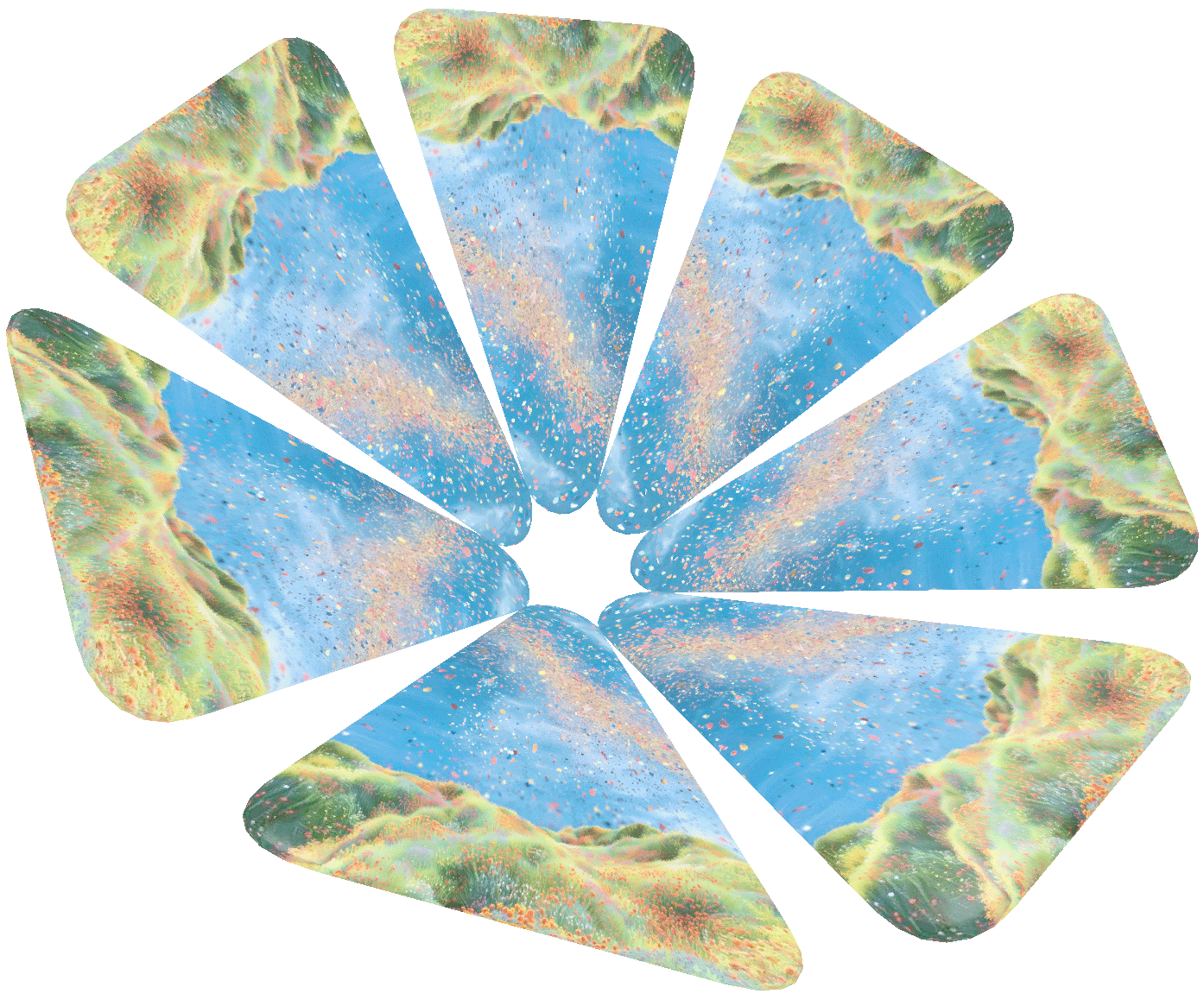
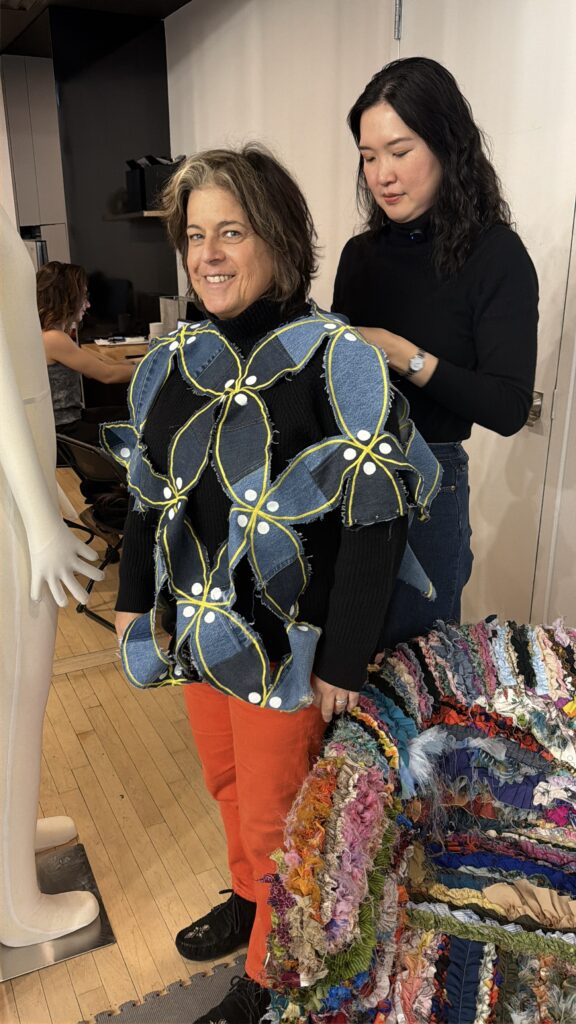
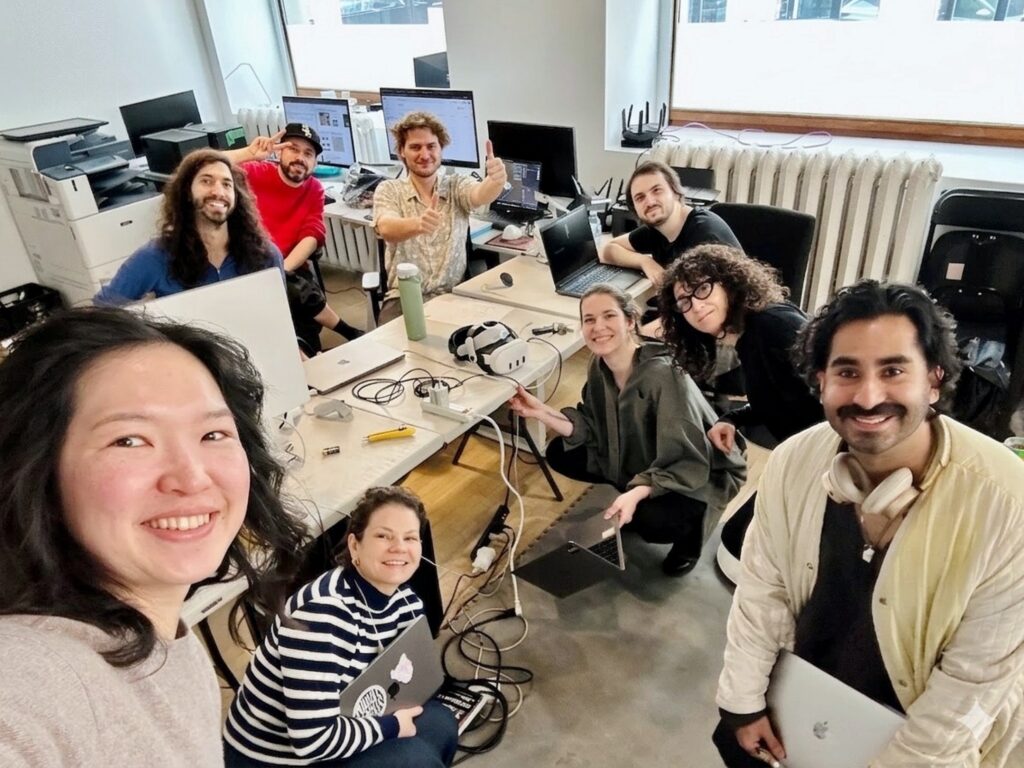
When Mira Musank called in from her studio in the East Bay, she was already deep into planning events for San Francisco Climate Week. She hadn’t even unpacked from her residency in Montreal. Behind her, I saw sketches, sewing machines, and a dress form clad in a kawung top, the one visitors wear when they step into Gathered Cloths, her extended reality (XR) experience.
Mira isn’t the kind of artist who came to XR through the usual routes. She spent years in the Bay Area startup world learning to move fast, work across teams, and build something from nothing. Mira calls it her “Agile training,” and she credits it for much of what she was able to accomplish during her residency at PHI.
She also doesn’t call herself a self-taught artist. “I’m community-taught,” Mira told me. “Because of these people creating content, I’m able to do all of these things.” It’s a distinction that sounds modest but is actually a statement about what learning is and where it lives. For Mira, it has always lived in the collective.
The thread
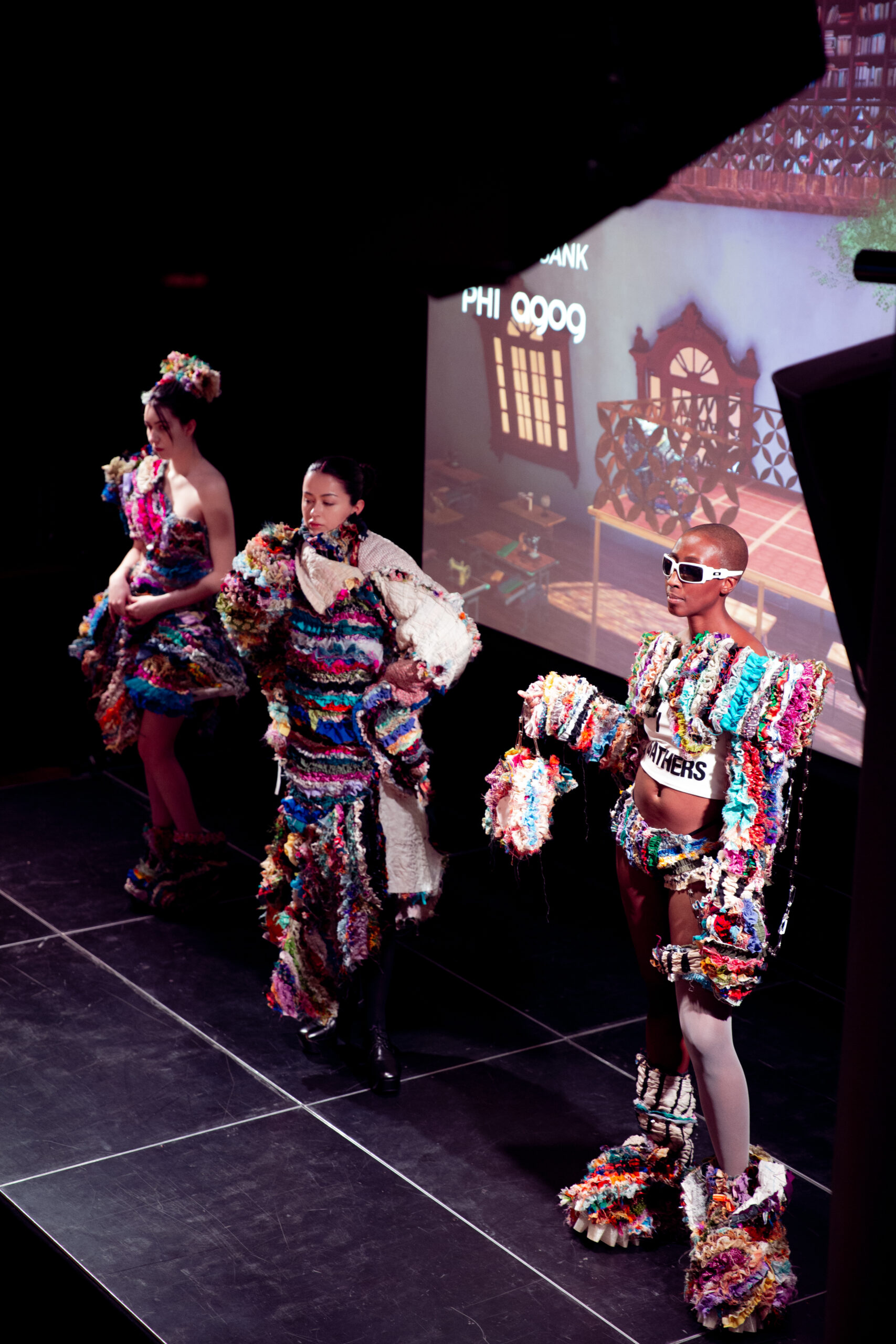
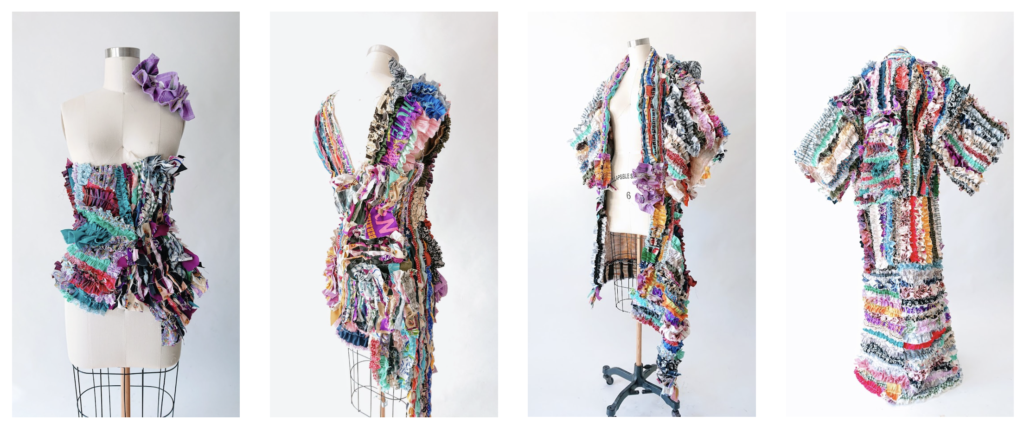
Gathered Cloths began in 2021, during Mira’s participation in a Climate Creative artist cohort. It was a response to a question she couldn’t stop turning over: How do you talk about textile waste without shaming people into shutting down? The answer she arrived at was iterative, tactile, and almost playfully Lego-like: Collect fabric scraps from neighbors and nonprofits, gather them into ruffles, sew them onto base cloths, assemble them temporarily into garments or sculptures—a corset, a mini dress, a jacket—then disassemble and start again, the collection growing with each iteration.
She pondered more questions. How do we bring this to more people? What happens when you bring all of this inside an immersive experience? What if participants could do the assembling themselves?
Winning the lottery
Mira found out about the PHI residency the way she finds out about most things: through community. A friend in a Discord XR group remembered her Climate Gallery 2022 exhibition with Climate Creative and sent her a link. She applied, expecting a rejection. She almost didn’t apply at all.
“I don’t consider myself a technical expert,” Mira told me. “But you need to have a vision first. A strong conviction about your concept. [With] the technical aspects, they will help you. You have to tell them what you would like to do, and then they will know how to help you.”
When she was accepted, Mira described it simply: “It felt like winning a lottery.”
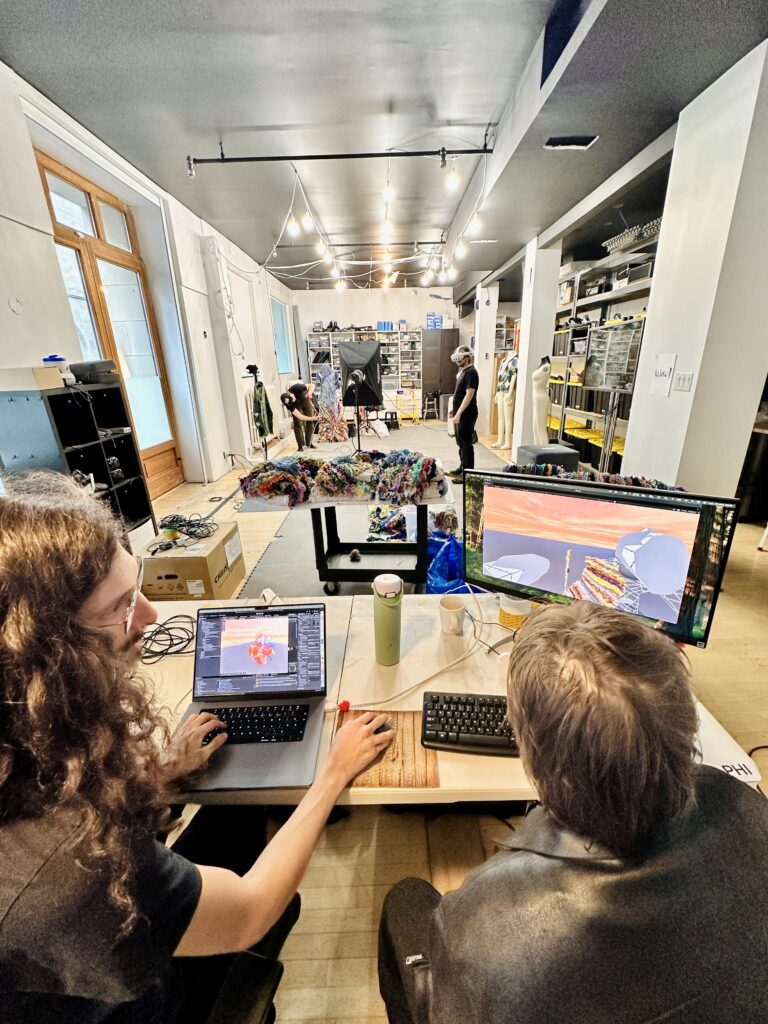
PHI Immersive, an XR residency program funded by Agog, supports North America–based artists and changemakers using immersive media to address contemporary challenges. The program provides tailored guidance from a full roster of specialists that includes creative directors, narrative consultants, technical developers, producers, and scenographers. It also offers an artist fee, housing, travel, and access to PHI’s and Agog’s creative and technological resources and networks.
The project
The residency quickly became something more like a master class in every discipline Mira hadn’t known she needed. What’s the narrative arc? What does the participant feel when they first put the headset on? What are they seeing? What do you want them to carry out with them? “I realized I needed to create a piece of cinema,” she said, laughing. “And I was like, am I ready for that?”
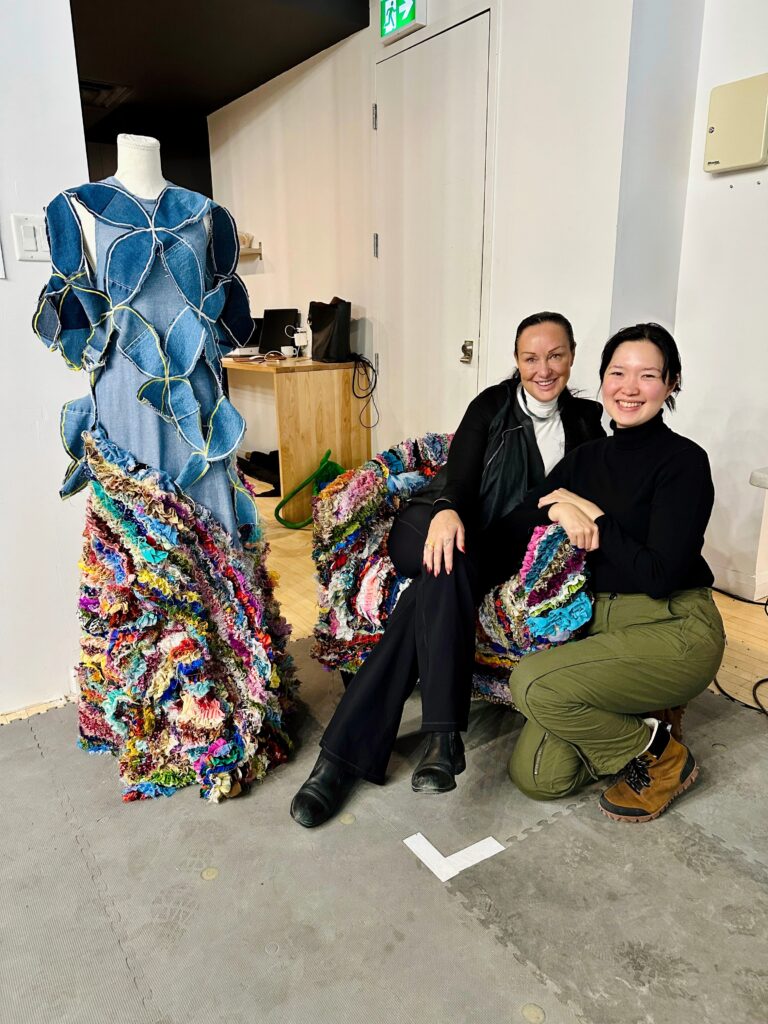
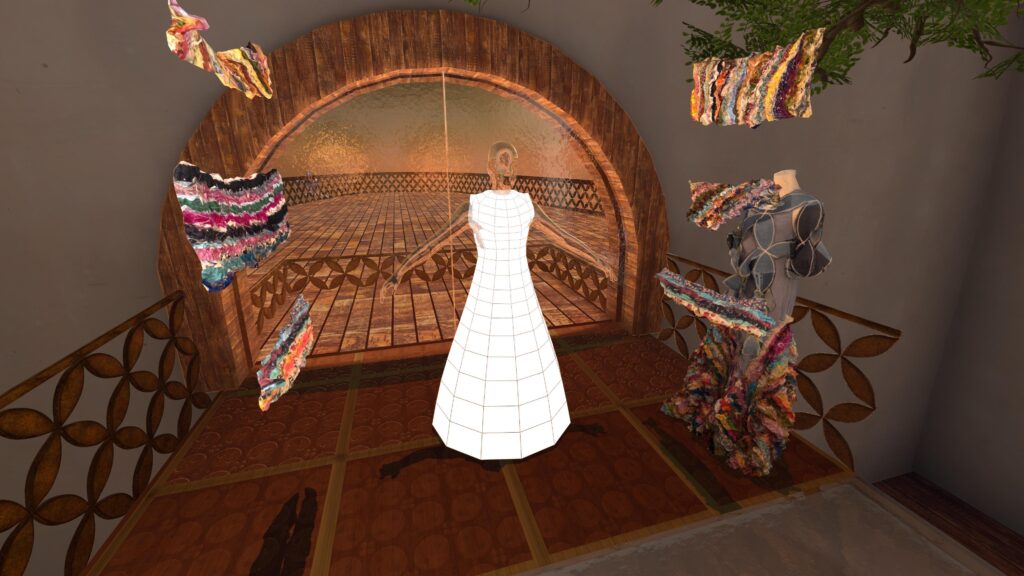
The final experience unfolds in three movements: agency (you have power, take it), creation (make something beautiful), and community (you don’t have to do this alone). Participants enter, wearing one of Mira’s garments—a physical one—then sit on a chair draped in colorful gathered cloths, put on a headset, and find themselves inside a virtual world where that same chair exists, digitally doubled. They iron a garment, pick up clothes from a table, and assemble ruffled fabric pieces onto a virtual dress form. They do, in other words, what Mira has been doing for years—seeing the beauty and potential in giving discarded fabric a second, third, or fourth life.
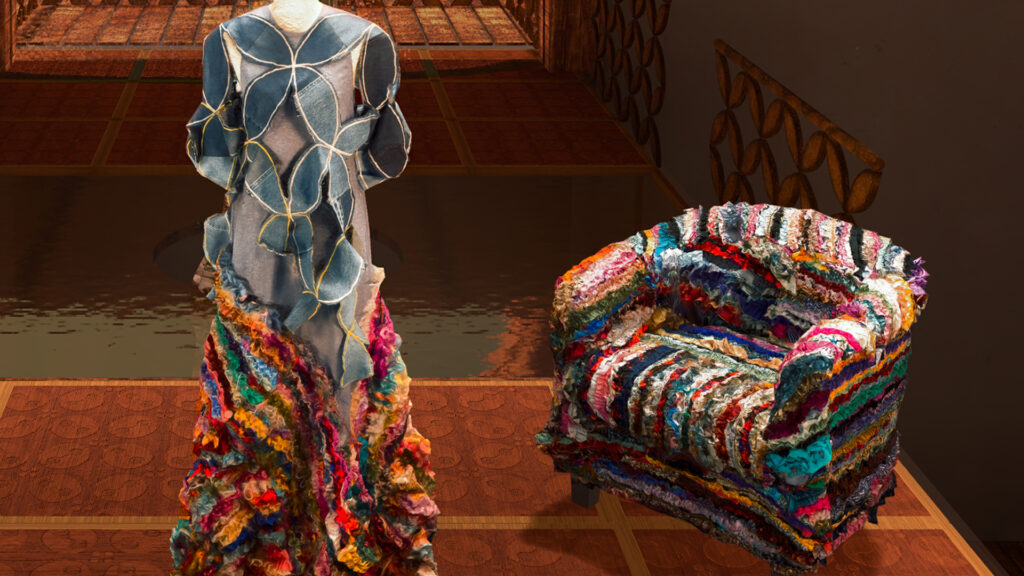
In the experience’s final scene, participants walk around a tree and hear eight voices from Mira’s circular fashion community—designers, futurists, teachers, stylists, community builders—offering encouragement and describing the solutions they’re building. Mira sourced each one of them. The work is full of people, and a celebration of her community.
What immersive does differently
The reactions at the end-of-residency exhibition, which included a collaboration with Montreal fashion and art studio Lignes de Fuite, moved Mira visibly, even in the retelling. Some visitors came out close to tears. Others were euphoric. Many were surprised: Gathered Cloths asks you to create. To iron something. To pick up garments. “People were doing this,” Mira said, miming the gesture of reaching and assembling. “And if you didn’t know what they were doing, you’d be like, ‘What the heck?’ But they’re actually creating an outfit.”
What struck the artist was how much of the experience stayed with the participants. “They would say, ‘That’s the Peruvian blanket, right? And this other one was accidentally bleached, right?’ They remember the stories. Way more than if I wrote a 12-page blog post about it.” For Mira, that’s the data point. That’s the case for immersive.
What’s next—and who should apply
Mira returned from Montreal to a full stack of residency and fellowship applications, most with April deadlines. The doors that opened, thanks to PHI Immersive, are overwhelming, she said.
But Mira’s clear about what made it possible, and it wasn’t technical skill. It was vision, community, and the willingness to say yes to a long shot.
Applications for the PHI Immersive 2026–2027 residency are open now, with a deadline of May 3, 2026. The program is open to North America–based artists whose work uses XR, AI, or immersive sound to engage audiences with pressing issues, including those who are entirely new to the medium. Learn more and apply at phi.ca.