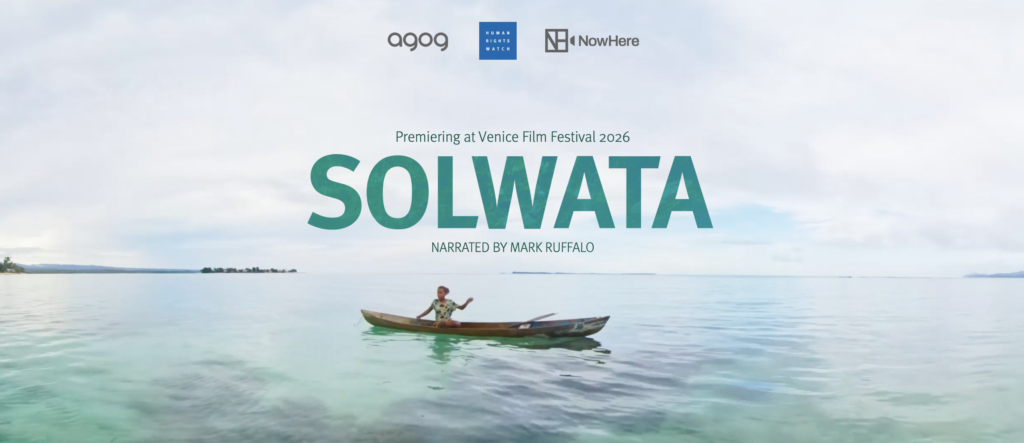
July 16, 2026, Berlin, Germany – A new immersive documentary spotlighting the climate crisis in the Pacific nation of Solomon Islands will premiere at the Venice International Film Festival (September 2–12, 2026), Human Rights Watch said today. The Academy Award–nominated actor and human rights advocate Mark Ruffalo has joined forces with Human Rights Watch to narrate the extended reality experience Solwata.
The 25-minute immersive documentary tells the story of the island communities of Walande, Ngongosila, and Kwai in the southwestern Pacific Ocean, as they confront the difficult questions of whether and how to relocate their homes and lives to the mainland because of devastating tides and rising sea levels.
“The first time I put on the headset, I felt like I was spending time with this community, not just learning about it,” said Ruffalo. “These families are deeply connected to their land, and seeing them forced to leave it because of climate change is heartbreaking. This is a global issue, and many of us don’t know how it’s impacting the communities living on the front lines. They are usually remote and usually outside our media and storytelling. Solwata brings audiences closer to people whose lives have already been transformed by climate change.”
Solwata, or “saltwater,” in Solomon Islands Pidgin, was created by NowHere Media and co-produced by Agog: The Immersive Media Institute and Human Rights Watch. It is one of the selections at the Venice Immersive part of the film festival. The project draws from Human Rights Watch research and firsthand testimony from people whose homes and communities are already being reshaped by the worsening climate emergency.
Ruffalo’s participation reflects the project’s focus on connecting climate issues with broader conversations about social justice and community resilience. Throughout his career, Ruffalo has been a prominent advocate for climate action, environmental justice, Indigenous rights, and democratic participation.
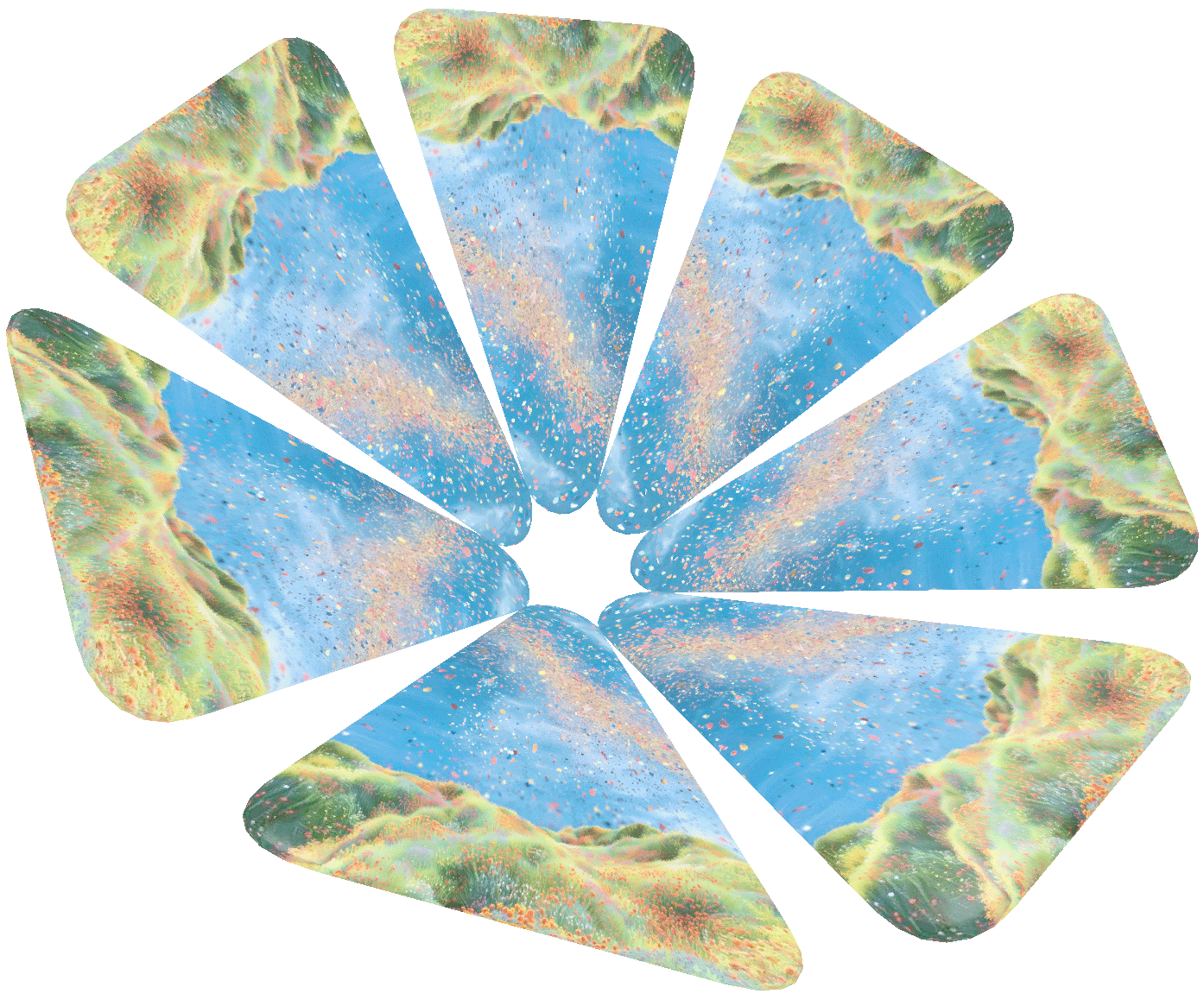
During the film, participants wear a virtual reality headset and move between physical and virtual worlds, reaching into water and handling culturally significant objects onsite, and being transported virtually into the stories of Solomon Islanders. Guided by voices from the community, audiences encounter the difficult decisions families face. By combining physical touch, virtual and real environments, spatial audio, and documentary storytelling, Solwata creates a deeply personal encounter with this global challenge.
This is the first such project for Human Rights Watch. It builds on the 2025 report, “There’s Just No More Land: Community-Led Planned Relocation as Last Resort Adaptation in Solomon Islands,” which documents how rising seas, coastal erosion, flooding, and increasingly severe storms forced the Walande community to relocate from its ancestral island home after decades of attempting to adapt in place.
Community members largely planned, financed, and carried out the relocation themselves, receiving little meaningful support from the government. Researchers found that the new settlement remains vulnerable to sea level rise and flooding, underscoring the community’s concerns that relocation may one day be necessary again.
“For years, Human Rights Watch has documented how climate change is forcing communities to make impossible choices about their homes, livelihoods, and futures,” said Erica Bower, climate displacement researcher at Human Rights Watch. “The planned relocation of an entire community as featured in Solwata is a complex adaptation measure with serious human rights implications that the world urgently needs to understand and prepare for. Immersive storytelling gives us a new way to engage audiences with these realities and strengthen support for communities already facing the human rights consequences of climate relocation.”
The issues explored in Solwata extend far beyond a single country. As rising seas and extreme weather increasingly threaten coastal communities around the world, governments and funders need to treat planned relocation as a last resort, to ensure that communities have a meaningful voice in decisions about their futures, and to provide the support needed to protect people’s rights, livelihoods, culture, and dignity. Solwata invites audiences to stand alongside those confronting this challenge—and to consider what responsibility the rest of the world has to communities facing climate displacement.
Following its Venice premiere, Solwata will travel to advocacy spaces and public forums, including the annual United Nations climate conference (COP31) in Türkiye, to engage policymakers, funders, journalists, and advocates in conversations about climate adaptation, planned relocation, displacement, and human rights.
“The impacts of climate change have displaced us from our home—where we used to enjoy life, where we lived—a place that kept us together as a community,” said Francis Siaumari, a community leader from Solomon Islands featured in Solwata. “What made the island special was the closeness. Wherever you go, there was always somebody around. Wherever you look, you are surrounded by the sea. Only we could have built an island like that.”
The Berlin-based immersive studio NowHere Media is the creative force behind Solwata. Known for its work at the intersection of immersive storytelling and social impact, the studio helped transform years of Human Rights Watch research and community testimony into an interactive experience. To create the project, the team traveled to Solomon Islands to conduct 360° filming and 3D scanning, collaborating closely with community members whose stories are at the heart of the experience.
“At NowHere, we don’t make projects about communities, but with them, —and that’s at the heart of Solwata,” said Gayatri Parameswaran, co-founder of NowHere Media. “Deep collaboration with community members and the team from Solomon Islands shaped every part of it, from the stories that are told to how they are told. Another big challenge on the field was running a cutting-edge immersive production on an extremely remote island. It required careful planning and a willingness to constantly adapt.”
Agog: The Immersive Media Institute, a philanthropic organization co-founded by Chip Giller and Wendy Schmidt, co-produced Solwata, provided production support and funding, and acted as a strategic partner to help bring the Human Rights Watch field research and advocacy goals into an immersive format. “I’ve spent nearly three decades in climate journalism, and one thing I learned is that information alone doesn’t always move people,” said Giller, co-founder and executive director of Agog. “Most people will never travel to Solomon Islands and witness these changes firsthand. Solwata uses immersive storytelling to bring audiences closer to the people living through this crisis, and that’s exactly the kind of work we founded Agog to support.”
Learn more: https://www.solwata.com/
Download media assets: https://media.hrw.org/preview/en/2540/immersive-documentary-centers-human-rights-in-climate-crisis
For more Human Rights Watch reporting on the environment and human rights, please visit: https://www.hrw.org/topic/environment
For more information, please contact:
For Human Rights Watch:
In San Francisco, Erica Bower (English): +1-917-890-4770 (mobile); or bowere@hrw.org; X: @EricaRBower
In London, Sam Dubberley (English, German, French): +1-917-581-1772 (mobile); or dubbers@hrw.org
In Amsterdam, Jan Kooy (English, Dutch): +31-642-091-869 (mobile); or kooyj@hrw.org; Bluesky: @kooyjan.bsky.social
In Paris, Myrto Tilianaki (English, French, Greek): +1-646-627-3545 (mobile); or tilianm@hrw.org; X: @MyrtoTilianaki
In New York, Maria Laura Canineu (English, Portuguese): +1-646-203-5670 (mobile); or caninem@hrw.org; X: @mlcanineu
In Brussels, Luciana Tellez-Chavez (English, Spanish): +49-302-593-0629 (mobile); or tellezl@hrw.org
For NowHere Media:
In Berlin, Gayatri Parameswaran (English, German, Hindi): +49-175-827-1133; or gayatri@nowheremedia.net
In Berlin, Felix Gaedtke (English, German): + 49-176-715-75101; or felix@nowheremedia.net
In Berlin, Daisy Huntington (English): +44-778-496-1933; or daisy@nowheremedia.net
For Agog: The Immersive Media Institute:
In Los Angeles, Alex Capriotti (English): +1-559-349-2804 (mobile); or alex@agog.org