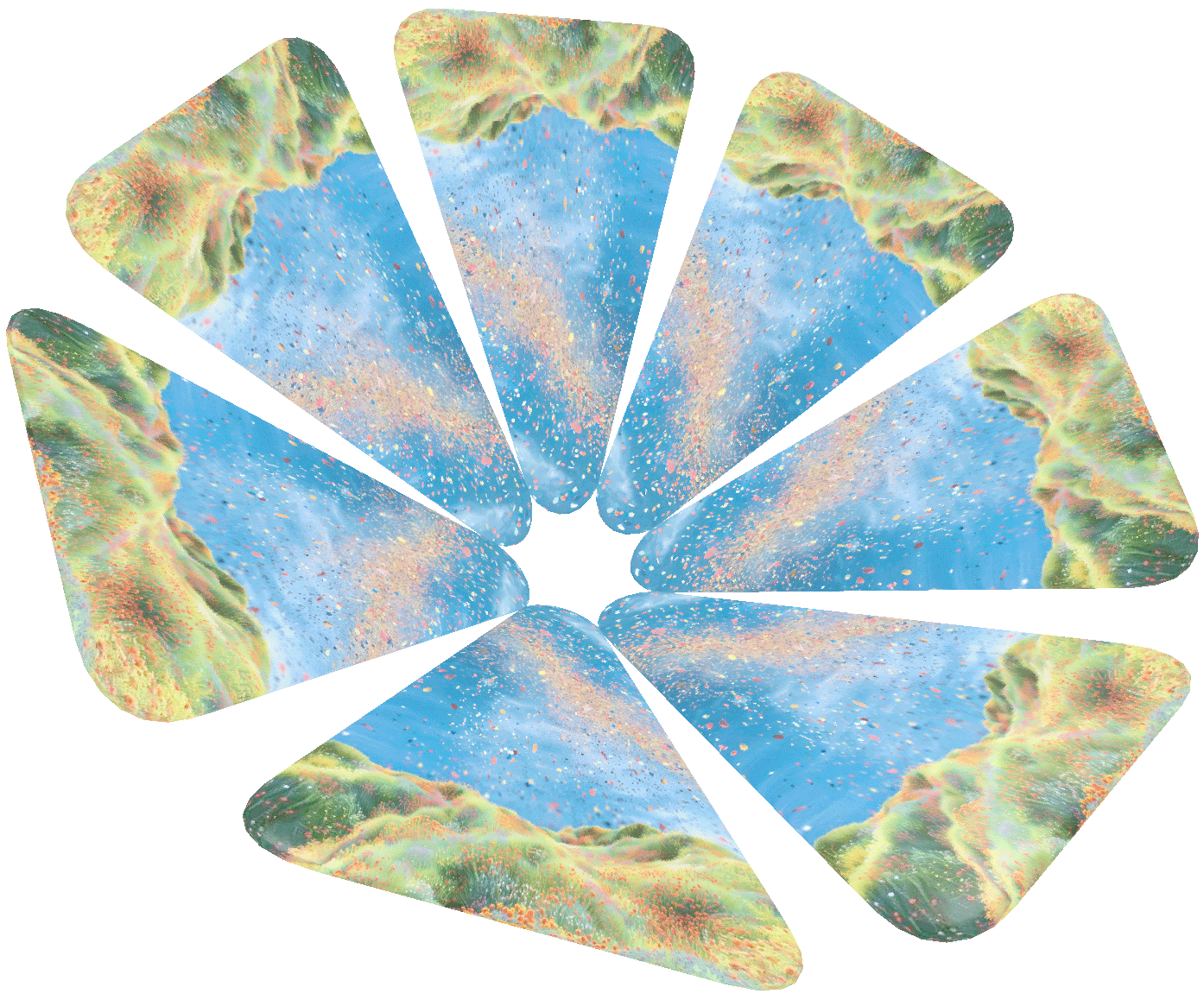

What does a more just, beautiful, and connected Downtown Los Angeles look like in the year 2085?
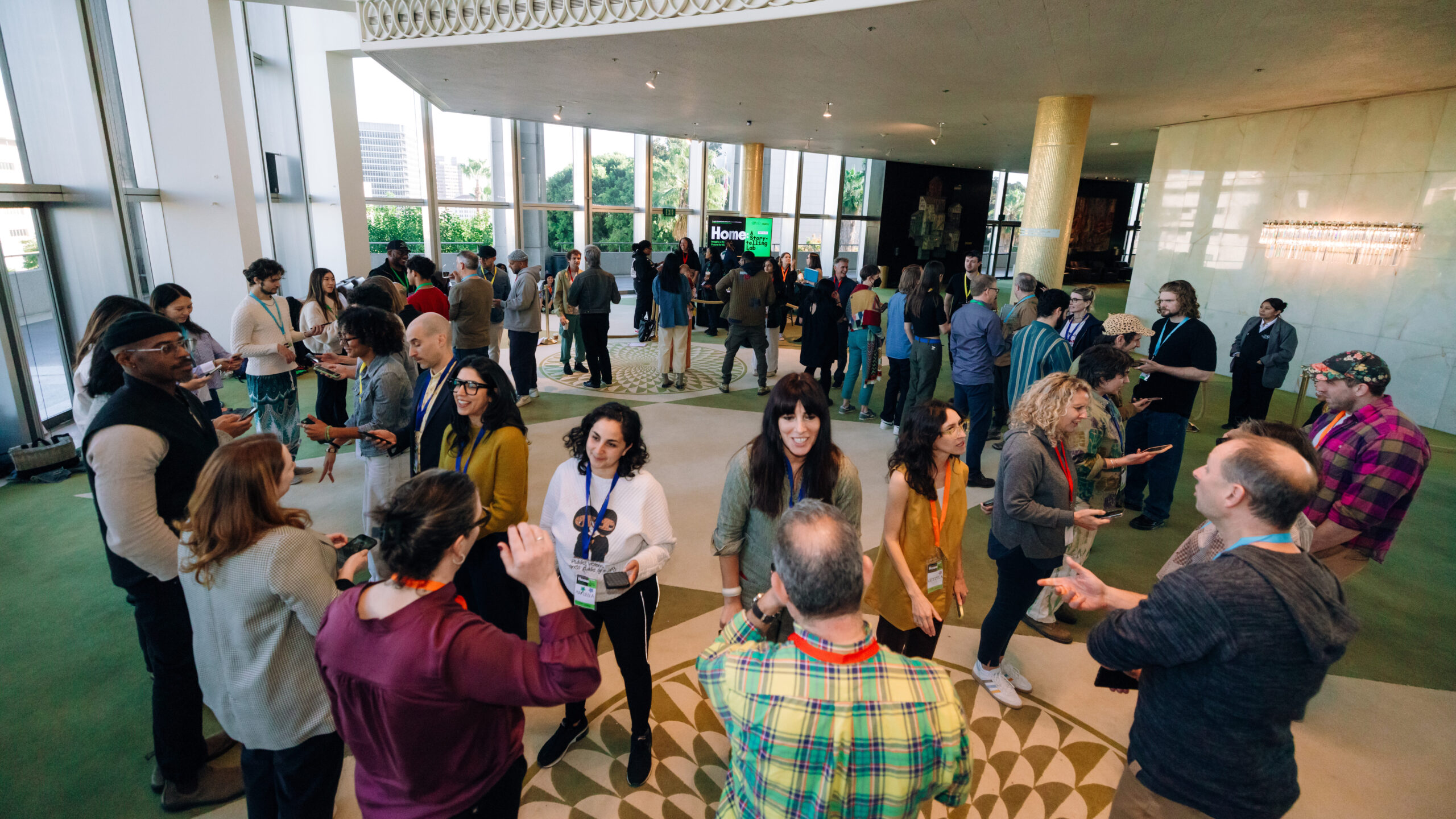
In December 2024, The Music Center, LA’s Performing Arts Center, and philanthropic organization Agog: The Immersive Media Institute brought nearly 70 people together—artists, technologists, community organizers, urban planners, and more—to explore that question. Over three days, participants used XR (extended reality) not only to imagine what could be, but also to feel it. To design it. And to ask how technology might help us get there.
The gathering, known as HOME: A Storytelling Lab, was more than a thought exercise. It was a test of XR’s power to guide people into new relationships—with each other, with public space, and with the possible.
Setting the Stage: A Vision for 2085
Before we could leap into the far future, we had to get rooted in the present. That meant building shared language, shared purpose, and a clear-eyed view of today’s challenges in Downtown LA
The lab centered on three major themes:
- Public Spaces for All: What does it take to create truly welcoming and inclusive spaces?
- Just Food Systems: How can we make access to healthful, sustainable food equitable—and joyful?
- Climate Justice & Environmental Well-Being: How can technology serve both people and planet?
Through discussion and reflection, participants surfaced tensions, hopes, and lived experiences that would shape every vision to come.
“We dreamt of a future in which we are able to set personal boundaries that allow us to use the technology around us as tools rather than letting it drive us, and one in which the systems in place prioritize how we want to use the technology created.”
—Lab participant
To transform perceptions from “me” to “us” and create a collective vision we:
- Opened the Lab with “Ancestors” by Smartphone Orchestra, creating a shared moment and provided participants with opportunities to engage with various digital experiences in an XR Experience Zone.
- Synthesized participants’ personal hopes, fears, and identities into collective poems.
- Highlighted spatial web technologies, local histories, food justice, and the importance of equitable, sustainable food systems through walking tours and shared meals.
Participants tour Downtown LA exploring how digital tools are already woven into the urban landscape. Photo by Will Tee Yang for The Music Center


What We Imagined: Worldbuilding with XR
With a shared grounding in place, teams turned toward the future. Guided by facilitators and supported by rapid prototypers and scribes, they imagined Downtown LA 60 years from now: not as a glossy tech utopia, but as a vibrant, complex, and caring ecosystem.
XR became the connective tissue—a way to translate big ideas into tangible experiences. From gardens supported by AI to optimize ecological health to story-embedded infrastructure, these speculative futures weren’t just futuristic, they were grounded in community needs and cultural wisdom.
“I often reflect on the sacrifices, the bounties, the choices that my ancestors have made to make it possible for me to be in existence. And I think that the decisions obviously we make will affect those future generations, so the more thoughtful and considerate we are—and taking ourselves and our own comforts sometimes out of the equation for the greater of our future—is of utmost importance.”
Lab participant
In our participants’ imaginations of 2085, Los Angeles is no longer a sprawling metropolis defined by corporate skyscrapers, endless concrete, stark inequities, and rigid institutions. It has transformed into a living, breathing ecosystem—an interconnected web of care, governance, and belonging.
Glimpse some of their future visions:
“Transit moved seamlessly; an underground, solar-powered hyperloop system carried people across the city in minutes, while above, green pathways shaded by fruit trees welcomed cyclists and walkers alike. Each building pulsed with purpose—libraries doubled as tech hubs, theaters as community gathering spaces, and former parking lots had transformed into lush urban farms.”

“So-Mem Gardens, towering 40 floors high, was built into the skeletal remains of an abandoned luxury housing complex. What once symbolized wealth inequality now feeds over 200,000 people and holds the emotional archives of Los Angeles itself. Each plant and root system in the hydroponic farm carries memories: recipes, lullabies, first loves, heartbreaks, migration stories, and dreams for the future.”


Can XR Help Us Feel More Human?
Despite the lab’s focus on advanced technologies, a central theme emerged: the importance of connections. Participants repeatedly emphasized the need to foster stronger connections between individuals, with nature, and within the community. One insight rose above all others:
XR is not just about high tech—the big opportunity is high connection.
Used well, XR can reconnect us: To place. To memory. To care. To each other.
1. Reclaiming Attention and Connection
XR offers a chance to redefine how we interact with urban spaces and stories. In a world of digital overload, XR can bridge physical and virtual realms, creating deeper, more meaningful experiences.
- Immersive Storytelling: Encoding history into digital twins, urban gardens, and interactive archives, making stories feel “lived” rather than simply recorded.
- Tech-Enhanced Engagement: Embedding sensors in urban infrastructure (trees, water systems), making cities more responsive to inhabitants’ needs.
- Ethical Digital Spaces: Open-sourcing XR and using blockchain-based systems to help ensure that technology enhances, rather than exploits, human interaction.
- Radical Accessibility: Designing spatial computing for universal access, ensuring everyone can participate.

2. “Touching Grass” (Literally)
Participants envisioned a rewilded Downtown LA: one where nature is not ornamental, but essential. XR helped them explore how digital tools might encourage sensory, embodied engagement with place, blending digital innovation with ecological responsibility.
- Public Rewilding: Prioritizing green spaces, food forests, and “deconcretization” to restore ecological balance.
- Sensory Reconnection: Using XR to enhance, not replace, sensory experiences, deepening our connection with the environment.
- Sustainable Systems: Integrating water recapture and vertical farming into urban infrastructure.

3. Investing in Community-Led Creation
The lab reminded us that technology must be built by and for the people. Community-led initiatives ensure technology serves collective needs, not just corporate interests.
- Decentralized Governance: Shifting power to cooperative models and participatory decision-making.
- Storytelling as Infrastructure: Embedding community histories and experiences into urban design.
- Radical Hospitality: Creating public spaces that foster care, cultural memory, and social support.
- Beyond Human-Centered Design: Recognizing the agency of plants, water systems, and animals as integral to urban life.

From Imagination to Action
The solutions that participants envisioned might take years of deep collaboration among civic leaders, businesses, and community members. The final day of the lab wasn’t just a wrap-up; it was a handoff. Participants mapped what they’re already doing, and they committed to new actions inspired by the time together.
Some formed new collaborations. Others seeded ideas for future programs. Every individual’s map was unique, but all pointed toward an LA built on connection, care, and collective agency.
HOME: A Storytelling Lab reminded us that while XR is a potent tool for imagining—and prototyping—new futures, the real magic comes when we use it to draw people into conversation, into belonging, into public space. It’s not just about what we build. It’s about whom we build it with.

Stay Connected
Agog is continuing to explore how XR can help communities imagine—and inhabit—better futures. Want to keep in touch?
👉 Sign up for updates from Agog
👉 Sign up for updates from the Digital Innovation Initiative at The Music Center
👉 Follow Agog on LinkedIn and Instagram